Willie Coleman is a 23-year-old real estate professional based in Greenville.
Coleman began his career at 15. Before he was 18, he’d already sold several properties. While others may consider him a real estate visionary or creative, he doesn’t define himself. He doesn’t want to put himself in a box with youth on his side. Despite his success, he said he’s still just figuring it out.
Growing up, he was homeschooled along with his two older brothers, Stewart and Vernon. Today, all three are business owners. Willie Coleman’s business started as a partnership with Stewart, who initially helped facilitate the contracts because Willie wasn’t old enough.
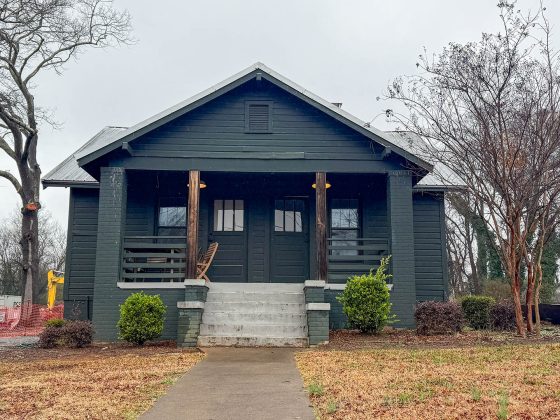
Coleman recently bought, tore down and redesigned The Ware House, a European-inspired, custom-built home on Ware Street in downtown Greenville.
Q&A with Willie Coleman
Q: What got you started? What was the first house you ever sold?
A: At 15, I cold-called around 4,000 people, and the first deal (was) this lady that was an absentee owner. She lived in California and her property was here in Greenville. … It was a tough situation because wholesaling you need to go see the asset, get it under contract, negotiate a fair price and still have enough room for margin. And in turn, you need to go get marketing material.
So me going there at 15 years old — I think I went with my dad or my brother. I can’t even remember, but with somebody because I can’t go there with myself, right? So we go there, knock on the door, and I think we got the house under contract for $40,000. Then we wholesaled the asset at $57,000 so we made about about $16,000 in gross profit.
Q: What are some of the organizational tactics you’ve implemented to get your business underway?
A: I feel like everything I’ve done has been very non-traditional, businesswise. Personally, even in the beginning, you spend a lot of money on marketing so the tactics were, “How do we ramp up cold calling? How do we bring on help?” Learning, delegation. I would — I still do to this day — use virtual assistants to help with things like skip-tracing, help with curating their list. How do we find these distressed people to get in front of them? In the beginning, it was just delegating to virtual assistants. It was learning certain systems. It was doing the simple things that just worked.
Q: How did you, as a teenager, convince someone to buy a house from you when at the time you may not have been able to conduct half of the paperwork yourself?
A: Listening to guys like Steve Trang and Max Maxwell, you learn about “smile and dial,” and just getting comfortable on the phone and getting comfortable with the “leave me alone, the f-you’s, don’t call me,” whatever. And just really getting comfortable with hearing “no” and and understanding this game. I learned you can’t say the wrong thing to the right people. And even though I didn’t have all the answers, even though it all wasn’t clear, I just did it.”
Q: Who are some local business owners who have helped you achieve success?
A: I mean from a construction standpoint, you figure a house like (The Ware House), we dealt with about 90 different contacts, from A to Z. One of the cool things that’s so beautiful about this business, and really every business, is how you collaborate with everybody. I was able to collaborate with (Justin Showghi) on this house, to do my CAD drawings. He does all of our structural engineering now.
Although we ordered our doors from Germany, that was a local supplier out of Spartanburg. We worked with The Cook’s Station locally for all our appliances. Every aspect is pretty much your local conference from that perspective.
Q: What are some of the things you wish people knew about real estate?
A: I know it’s a big decision for a lot of people — this is your forever home, but just try to think about it from a logical perspective. Real estate is numbers. It’s logical. I wish more people could just communicate a little bit better and think about things from a larger perspective.
Q: What message would you like to share with our readers?
A: The future should look like the future, and I want this to infect people. I want everybody to have a better standard. Let’s all raise our standards. It doesn’t matter if you’re doing multimillion dollar homes or spec homes. Just do things with a sense of “if this were my family” and “how would I want to be treated?”