Welding technicians are in high demand both locally and nationally.
The American Welding Society projects the need for 320,500 new welding professionals in the U.S. by 2029. Demand for welders is also expected to increase in Upstate South Carolina as industries that require these professionals continue to grow in the region.
Greenville Technical College has expanded its welding program to meet this workforce need by building a $32 million Center for Welding and Automation Excellence on its Brashier Campus in Simpsonville. The new 44,000-square-foot facility welcomed students for the 2026-27 school year in August.
Elevated need
According to Greenville Technical College, only one new welding technician enters the workforce for every four that retire and leave the field. Wayland May, global welding director at Fluor Corporation, explained that it can be challenging for companies to find and recruit candidates for open welding positions.
“It’s a problem that we’ve created for ourselves and the culture that we’ve had,” May said. “For a couple of generations now, everyone has promoted, ‘Go into technical, go into more professional careers,’ and not so much emphasis has been placed on the trades.”
Workforce data from Lightcast shows there are currently 6,598 welding-related jobs across the 10 counties comprising the Upstate South Carolina. This is higher than the national average of 5,461 jobs. Approximately 314 additional welding jobs are expected to be created in the Upstate by 2031.
Welding technicians are specifically needed for the region’s growing manufacturing and construction industries. Larry Miller, president of Greenville Technical College, explained that demand for welders has also increased in the state’s expanding energy sector. For example, Duke Energy plans to build a new natural gas power plant in Anderson County. Hundreds of welders are expected to be needed for the multi-year construction project.
Some of the major local employers of welding technicians include GE Vernova, Duke Energy, Lockheed Martin, Fluor Corporation, Boiler Tube Company of America and Vermeer. Luke Hardaway, human resources director for Vermeer, said approximately 40 to 50% of the company’s welders were trained at Greenville Technical College.
“The amount of welders (Greenville Technical College) is going to produce and put out into the marketplace is going to be fantastic, and it’s going to go a long way to supporting the growth around here,” Hardaway said.
Expanded programming
 Approximately 175 students are currently enrolled in the welding technology program. The college offers two welding certifications that train students to the standards established by the American Welding Society and the ASME Boiler and Pressure Vessel Code.
“These nationally recognized standards ensure our curriculum aligns with industry best practices and prepares students to meet employer expectations in a variety of welding careers,” said Terrance Shearn, the college’s department head of welding technology.
The Center for Welding and Automation Excellence increases the college’s total number of welding stations from 95 booths across two campuses to 122 booths within the single facility. Classes are offered in the morning, midday and evening, allowing the welding program to accommodate 366 students each day. Shearn said the college has already started looking to add more classes to serve additional students.
The college also introduced a new engineering fundamentals associate in applied science with a welding engineering concentration for the 2026-27 school year. Students will spend two years taking foundational engineering courses with applied study in welding processes to earn the degree. It will articulate into the college’s applied bachelor’s in advanced manufacturing technology.
“From what we’ve seen, there’s not another two-year engineering degree, and so we’re looking to partner with Ohio State University, which has a welding engineering degree, and Ferris State University, which has a welding engineering technology degree,” Shearn said. “We want to partner with both schools to be able for our graduates, if they want, to transfer to those different schools.”
According to Greenville Tech, the welding technology program has a 91.6% job placement rate for students after graduation. Kelvin Byrd, the college’s chief economic development officer, said around half of the students who come through the program secure a welding job after completing one semester.
“We do find that sometimes students want to go straight to work,” Byrd said. “We do try to encourage those students to complete the program because the certifications that they receive at the end of the program basically allows them to be paid at a much higher hourly rate, and students can make over six figures easily.”
Enhanced technology

Welding, similar to many other trades, has evolved over the years as new technology has come online. Byrd said the college’s welding technology program teaches the same basic techniques from 30 years ago. However, students now have the opportunity to receive hands-on training with the advanced technologies used by welding professionals today.
The Center for Welding and Automation Excellence features specialized labs for robotics welding, pipe welding, laser welding, metal inert gas (MIG) welding, fabrication and non-destructive testing. The facility also includes the first artificial intelligence-powered welding lab in the country, according to the college.
“We’re thrilled to have the (AI) equipment,” Miller said. “We think it’ll make our welding students more productive, which means it makes their business more profitable. We hope that really results in higher wages for them and a safer working environment.”
The welding technology department has an advisory board of 25 local employers and industry partners. The board helps ensure the welding curriculum and skills taught by the technical college reflect current workforce needs.
“(Employers) would like welders to be able to do multiple processes,” Shearn said. “We’ll teach all aspects of welding, whether it be MIG welding, TIG welding, stick welding, laser welding, robotic welding. So the students that graduate from this program are very well-rounded in the welding industry.”
Educational partnerships
 The Center for Welding and Automation Excellence has also expanded opportunities to train future welding technicians at a high school level. Greenville County Schools (GCS) has leased the college’s former welding facility on the Brashier Campus starting the 2026-27 school year.
According to GCS, an average of 300 students apply for the school district’s welding program each year. It previously had only 100 welding booths across its four career centers.
Utilizing the existing facility at Greenville Tech provides 120 additional welding seats for the school district. The welding students also have access to hands-on class activities at the Center for Welding and Automation Excellence.
High school students at the Golden Strip Career Center will be able to take two years of welding classes on the college’s Brashier Campus. Those interested in furthering their education can also apply to take welding courses through dual enrollment.
“Greenville County Schools is an excellent partner of ours through our dual enrollment program,” Miller said. “It’s the largest dual enrollment program in the state, serving over 3,600 students.”
The college also plans to allow local companies to train their employees at the new welding facility. May expects Fluor Corporation to conduct specialized training at the Center for Welding and Automation Excellence tailored to the company’s specific needs in the future.
A long-term goal is for the Center for Welding and Automation Excellence to become an Accredited Testing Facility through the American Welding Society. The national accreditation would allow the facility to test and qualify welders for national credentials. Byrd said it will take approximately a year for the college to put it in place.
Project details
Greenville Technical College broke ground on the new Center for Welding and Automation Excellence in April 2025. The college’s leadership team went on 10 benchmarking trips while planning the new facility.
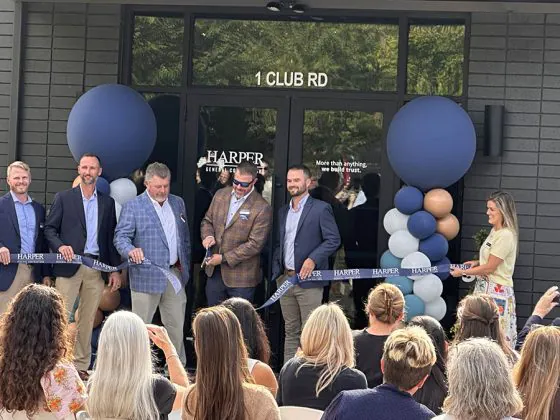
Goodwyn Mills Cawood designed the Center for Welding and Automation Excellence, and Thompson Turner Construction built it. The facility’s ribbon-cutting ceremony was held in August.
Funding breakdown
The $32 million project received $15 million from the South Carolina General Assembly and $3 million in federal funding secured by the late Sen. Lindsey Graham.
Facility details
The Center for Welding and Automation Excellence features specialized labs for:
- Artificial intelligence-powered welding
- Robotics welding
- Pipe welding
- Laser welding
- Metal inert gas (MIG) welding
- Fabrication
- Non-destructive testing
The 44,000-square-foot facility also features breakout rooms and dedicated study spaces.
Workforce data
The 10 counties in Upstate South Carolina have 6,598 total welding-related jobs. Here are the totals for the five most populous Upstate counties:
- Greenville County: 2,597
- Spartanburg County: 1,418
- Anderson County: 847
- Pickens County: 400
- Oconee County: 344
Source: Lightcast Q3 2026 Data Set