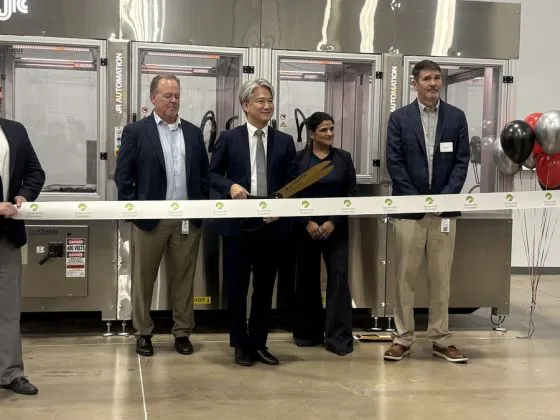
The industry attempts to distance itself from its ‘dark, dingy and dangerous’ image
There is a branding problem in manufacturing, and creating awareness at the earliest stages of education is essential to changing the negative perceptions associated with manufacturing jobs and building a future workforce.
Based on conversations with educators, manufacturing consistently ranks as one of the lowest career clusters for K-12 students, said Kris Frady, director of operations at the Clemson University Center for Workforce Development.
The industry routinely has openings up to eight months for entry-level positions because applicants do not have the proper skill set to perform the duties assigned with the job, she said. “Because there is a perception issue, educators are not encouraging students into manufacturing, and the existing industry cannot entice people to attain the proper skillset.”
Frady said the public perception of careers in manufacturing will not be improved until educators and parents become informed on advanced manufacturing in the 21st century.

During the recession, manufacturing throughout South Carolina suffered, discouraging potential employees from entering the field and creating a perception throughout the state that careers in manufacturing were not sustainable.
 Post-recession gains in statewide economic development and job announcements have signaled a new day for manufacturing, Frady said.
The industry today involves advanced technology and requires skilled hands, she said. “The work is no longer just heavy lifting and manual labor; it is automated and computer-enabled.”
To create a sustainable and viable workforce, the manufacturing industry must shed its traditional image by modifying the school system’s curriculum to suit the modern demand.
 Frady said impacting the public perception must be done through effective education.
Essential information on contemporary manufacturing is not getting through to the students, she said. “They are not aware that the average salary in this state can be close to $45,000 per year with a two-year degree.”
Information collected last year by the Michelin Career Center shows the average starting salary for a student with a bachelor’s degree from Clemson University’s College of Engineering and Science is $57,582.25. Of the programs offered at the college, a chemical engineering degree yields the highest starting salary at $65,062.38, while students with a degree in bioengineering can expect a starting salary of $44,000.00.

Rebecca Hartley, director of pathways at the Clemson University Center for Workforce Development, said high school diplomas are no longer sufficient in the manufacturing workforce.
Students are required to at least complete a certificate program or earn a two-year degree to find gainful employment in the industry, she said. “Public awareness begins in the schools.”
Frady said the change in perception is crucial to economic development in South Carolina.
The industry must educate the state’s citizens about potential opportunities, she said. By promoting advanced manufacturing and combatting the industry’s outdated perception, the production of employment prospects for South Carolinians will be increased.

Manufacturing has a rich history in South Carolina and is experiencing a statewide resurgence, said Brian Gallagher, spokesperson for O’Neal Engineering.
 Local manufacturing drives the regional economy, he said. Recent capital investment announcements by companies such as BMW, ZF and Colgate Palmolive are creating new career opportunities in the Upstate.
Gallagher said these jobs are significantly different from the manufacturing jobs of a few generations ago.
Parents and high school students should explore what a career in manufacturing looks like today, he said. Many of today’s manufacturing jobs require specific skills and training, offer competitive wages, benefits and advancement opportunities.
The Upstate manufacturing industry has an opportunity to tell a new story, Gallagher said.
The current manufacturing environment involves robotics and automation while placing an emphasis on science, technology, engineering and mathematics (STEM) at the earliest stages of education, he said. “Many plant environments today involve high-technology jobs.”
The production of sophisticated technologies in the automotive, aerospace and textile industries is common among modern manufacturing careers.

Advanced chemistry and nano-technologies are being used throughout manufacturing and require educated employees and skilled hands, said Lewis Gossett, president and CEO of the South Carolina Manufactures Alliance.
There are world-class products being produced in the state of South Carolina, he said. Through the proper application of STEM based education to young students, certificate programs, and two-year colleges, a sustainable workforce can be produced.