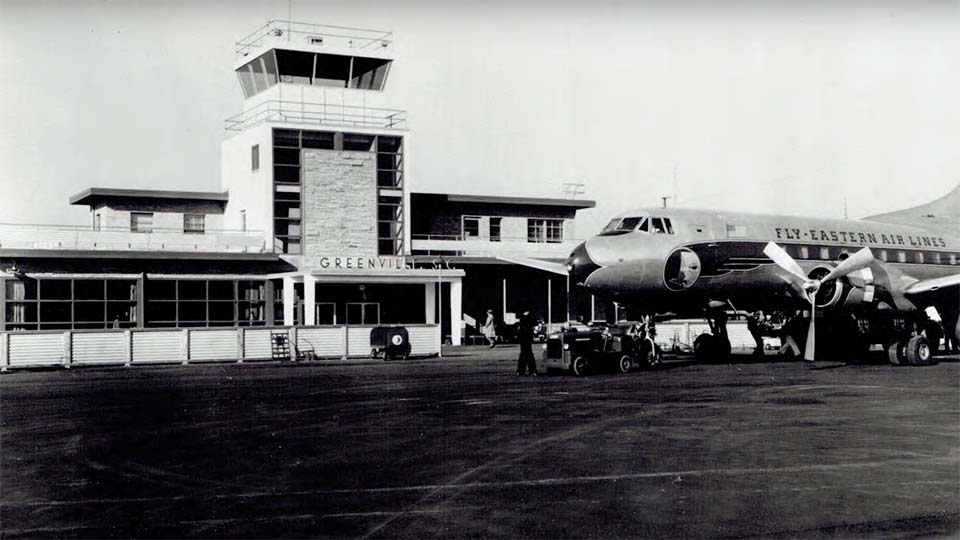
When Daniel Construction founder Charlie Daniel and Spartanburg industrial giant Roger Milliken first conceived plans for a regional airport in 1958, the jet age was in its infancy and the land that is now home to Greenville-Spartanburg International Airport was the heart of a rural farming community called Flatwood.
But the two men had a vision, doggedly pursued, that culminated in GSP’s dedication on Nov. 2, 1962 — two years before I-85 was complete and in a South Carolina where textiles were still king.
In many ways it was a different world that fall 60 years ago. Thousands swarmed the terminal and airfield during dedication festivities, an outcome that would be unthinkable now in the post-9/11 world of exhaustive security screenings and tightly controlled access.
But much is the same, according to Tom Tyra, GSP’s director of communications and air service. He said promotional materials from those early giddy years made much the same pitch as current versions that extol the Upstate’s quality of life and business friendly environment.
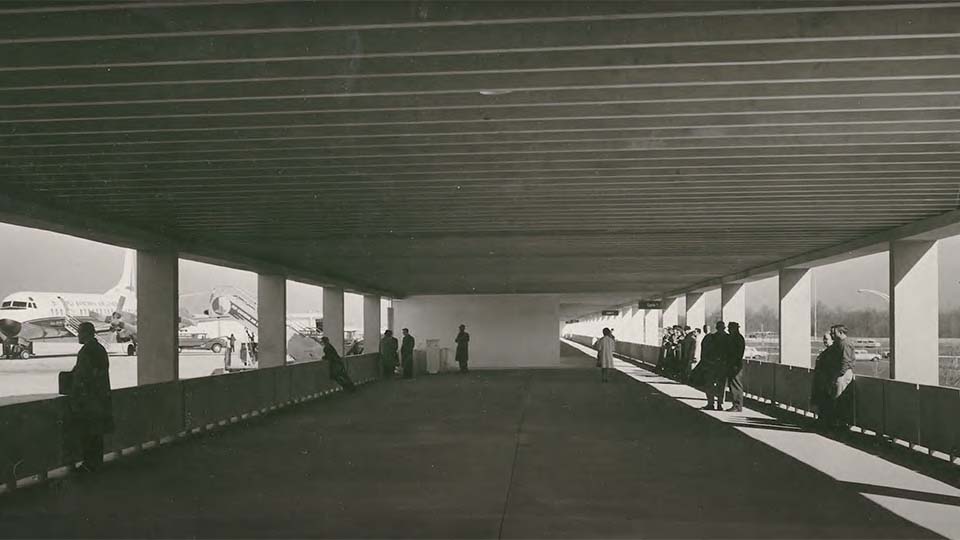
Much of the region’s phenomenal population and economic growth over the past 60 years comes down to forward-thinking leaders like Daniel and Milliken who forged regional cooperation, Tyra said. The $10 million investment they spearheaded to purchase GSP’s 3,700 acres and begin initial construction has made the airport a crucial gateway to the Upstate.
During the ensuing years. GSP has gone from an initial 200,000 annual travelers to a current level of about 2.6 million and the capacity to handle nearly double that amount.
Through steady growth in the 1970s and the addition of a U.S. Customs and Border Protection office that earned the airport its international designation, GSP’s leadership has continued to look ahead.
“There has been a lot of planning for the future and a focus on the land around the airport,” said Minor Shaw, chairman of the Greenville-Spartanburg Airport Commission as quoted in “Flight Plan.” The book chronicles much of the airport’s history and offers a glimpse of future plans.
“I was so impressed when I came on the commission that we had not only a 10-year plan, but a 50-year plan,” Shaw said. “That’s hard to do.”

Tyra said the airport will look toward expanding service and the number of destinations as air travel continues its post-pandemic recovery. The airport is also studying the feasibility of adding autonomous transportation technology to eventually move people to and from the terminal and parking areas.
GSP’s 2020-2040 master plan also envisions a major expansion of Concourse B, additional air cargo capacity and a new control tower.
Looking to the future, Tyra sums up GSP’s prospects succinctly.
“It’s an exciting time,” he said.
GSP timeline
- Oct. 15, 1962 — GSP opens a mere 15 months after groundbreaking and receives first flight
- 1965 — First jets arrive
- 1971 — First air cargo building opens
- 1984 — South concourse expanded to add three gates
- 1985 — Delta and American Airlines announce GSP service
- 1989 — Project doubling terminal size completed
- 1999 — Runway extended to 11,001 feet
- 2011 — Southwest Airlines comes to GSP, causing rapid jump in passenger numbers
- 2012 — WINGSPAN $127 million terminal expansion and renovation
- 2019 — $33 million, 110,000-square-foot cargo facility and aircraft parking added
- 2021 — Silver Airways and Contour Airlines add new nonstop service