
At the start of 2023, when the Greater Greenville Sanitation District announced the end of its residential recycling collection service, it was only the latest in a string of municipalities that called it quits with recycling.
Simpsonville, Greer, Easley, Clemson and more had already ended curbside pickup for recycling, citing increased costs.
“It is financially irresponsible for the city to continue offering the service,” the city of Greer said when it ended its recycling services last summer.
But if the strong backlash form the public is any indication (indeed, the offices of Community Journals received dozens of letters and emails from angry residents about the changes), there remains a strong desire for recycling services.
That’s where private recycling companies like Greenville-based Bricolage Dynamics come into play.
“We’re at an interesting point in the recycling industry where it seems like everywhere municipalities are continuing to repeal their recycling programs,” said Zeb Parsons, founder and president of Bricolage Dynamics. “What you see then in these smaller markets are more and more startups gaining traction to fill that need.”

It is an environmental need, yes, but also an emotional one, Parsons said. For decades, Americans have grown accustomed to recycling as a way of doing their part to keep the planet healthy, and removing that ability can be distressing for many.
But when you tossed something into your recycling bin at home, did you ever pause to wonder where those items actually ended up?
For decades, the answer to that question was easy: China.
More specifically, the vast majority of recycling from the United States — as well as that of Europe and Australia — was purchased by China for cheap. The materials were then sorted through for their valuable components, of which only about 9% was considered worthwhile enough to be actually recycled, according to the National Center for Ecological Analysis and Synthesis. The rest of the material was either burned by China (about 12%) or buried in Chinese landfills (about 79%).
Most Americans have no idea that their good faith efforts to sort through their recycling resulted only in their items being burned or landfilled across the world, Parsons said.
“We consider those decades to be the glory days of recycling, but when you look into it, the materials we were shipping over there and saying we ‘recycled’ were actually highly contaminated, and so much of it was just either landfilled or burned off,” Parsons said. “But as they say, ‘Out of sight, out of mind.’”
But since China implemented a ban in 2018 on the importation of such materials, recycling efforts are much more in sight and therefore in mind.
Related: Keeping the green in Greenville
It’s also way more expensive.
Companies like Bricolage offer a means of localizing recycling efforts in a way that calls to mind the “farm-to-table” efforts of local food industries.
“If you go to Walmart and you buy some food that says ‘organic’ on it, you’re basically taking them at their word,” Parsons said. “But if you shop at somewhere local like Swamp Rabbit Grocery, you have the actual name of the farm down the road where it was grown.”
Priced out: Why Upstate cities are abandoning their recycling programs
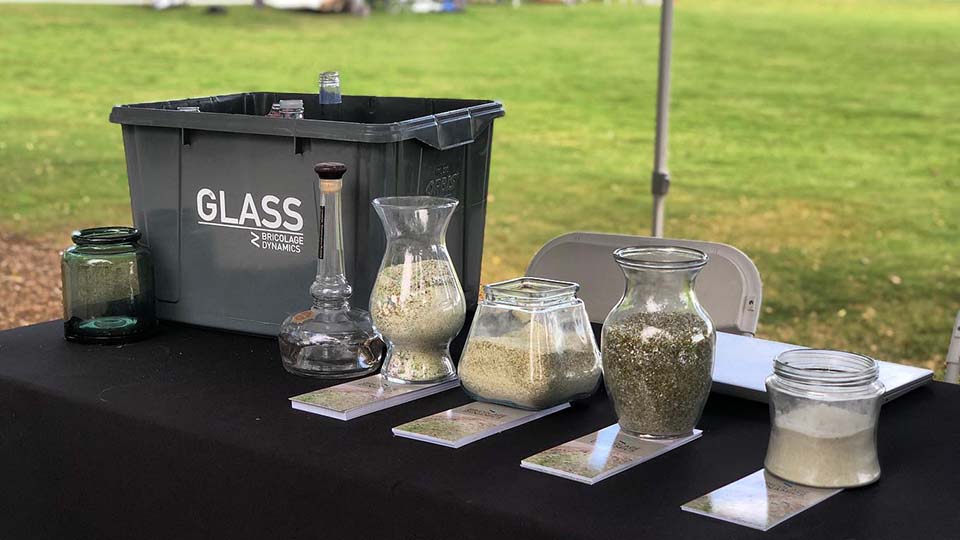
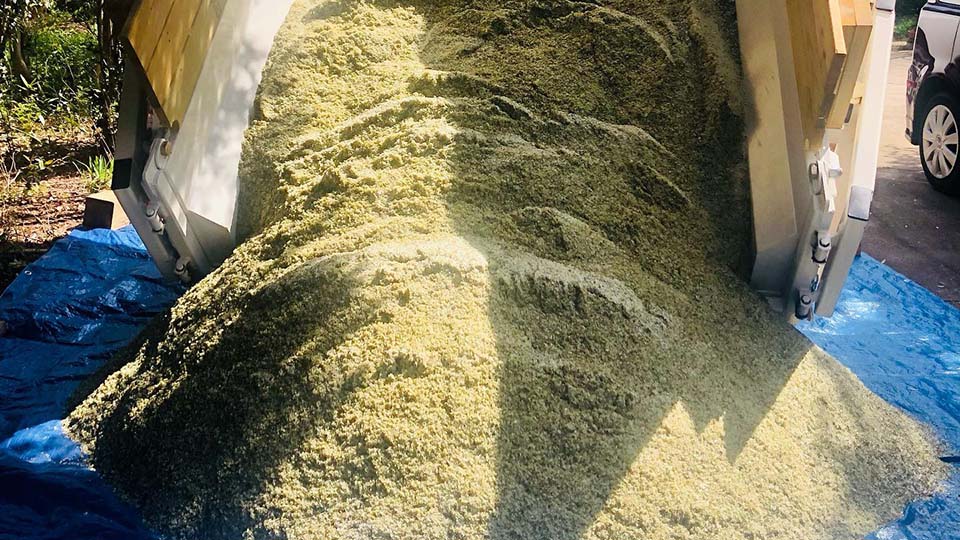
Bricolage currently operates two trucks in Greenville, picking up recycling from apartment buildings and other residences that aren’t eligible for recycling from the city. It then processes the materials and recycles them in Pickens. Recyclable material is then pulverized into sand aggregate, stored, reprocessed and distributed.
It’s admittedly a more limited service than what a municipality can offer — Bricolage currently only recycles glass, for instance — but as more municipalities opt out of recycling, more opportunities can arise for local services with more visible supply chains, Parsons said.
“People feel very passionately about recycling, but what is the burden of proof?” he said. “How do you know it’s working? We’re trying to build that transparency right here.”


