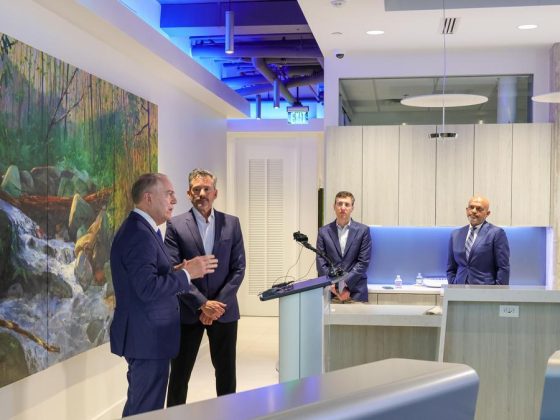
The South Carolina Department of Health and Environmental Control (DHEC) recently honored the South Carolina Ports Authority (SCPA) with a “Spare the Air” award for its emissions reduction efforts. The Upstate Air Quality Advisory Committee (UAQAC) won in the Outstanding Community Improvement Campaign category for the Clean Air Upstate (CAU) initiative. According to a release, the award is given to recognize “environmental leaders that have made a voluntary commitment to promote and practice air quality improvement in South Carolina.”
The SCPA has reduced port-related pollutants by 50 percent since 2005 through equipment upgrades, partnerships and operational commitments to improve air quality.
“We are committed to operating in a way that is safe for our employees, neighbors and the environment,” said Jim Newsome, SCPA president and CEO, in a release. “We are pleased to be recognized by DHEC with this award, which is only possible through the support of our partners in the maritime industry and trucking community.”
SCPA’s reduction efforts include incentives to truck drivers to upgrade their engines to newer, more efficient models; upgrades to terminal equipment to support emissions reductions; and reductions in the amount of time a truck spends on terminal from entry to exit, as well as crane efficiency. Collaborations included the Charleston, Waccamaw and Upstate Air Quality Coalitions; Southeastern Diesel Collaborative; Coalition for Responsible Transportation; and the Southeastern Wind Coalition, as well as the City of Charleston’s Green Business Challenge and the S.C. Inland Port.
CAU centers on the Regional Air Quality Pledge, which allows local governments, businesses, community organizations, media outlets and individuals to illustrate their commitment to improving air quality. Twenty-three governments, businesses and community organizations have signed the pledge.
CAU also promotes DHEC’s Breathe Better (B2) program, which focuses on reducing vehicle emissions around school campuses with a focus on making schools a no-idling zone for both school buses and personal vehicles as a way to protect the health and safety of children. CAU also offers a series of clean air tips developed, which are available at cleanairupstate.org.