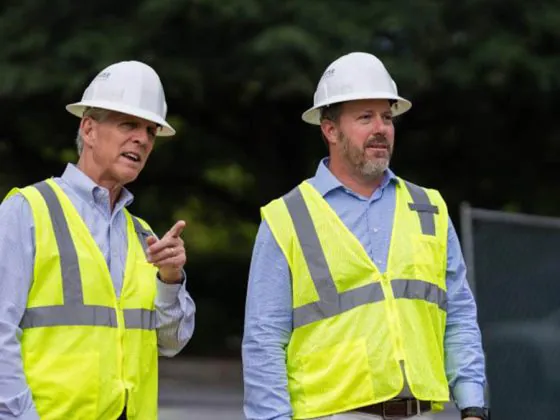
Will Huss serves as CEO of Trehel Corp., one of the region’s leading privately owned general contractors overseeing large-scale construction projects across various industries within a 90-mile radius of its corporate headquarters in Greenville. Huss assumed the role of CEO in 2007 after joining Trehel 10 years prior. Earlier this year, Huss and his team launched Trehel Tailored Homes, combining decades of residential-construction experience with a focus on luxury homebuilding and high-end renovations.
Huss serves on the board of directors for United Ministries, the Greenville Chamber’s Accelerate Leadership Council and the Greater Area Parkinson’s Society board in Greenville. He is also the national coordinator for Reformed University Fellowship and a ruling elder at Clemson Presbyterian Church. Huss and his wife are Clemson University alumni and reside in Clemson.
Q & A with Trehel Corp. CEO
Q: Now that interest rates seem to be headed down, do you anticipate impacts on the number and scope of construction projects Trehel undertakes?
A: While higher interest rates have caused some projects to slow down over the past 15 months or so, we expect the anticipated lower rates to accelerate projects in some areas. We expect to see this across our footprint and in various project scopes and market segments. While all projects are “math problems,” many of our opportunities are not determined by interest rates as the primary driver.
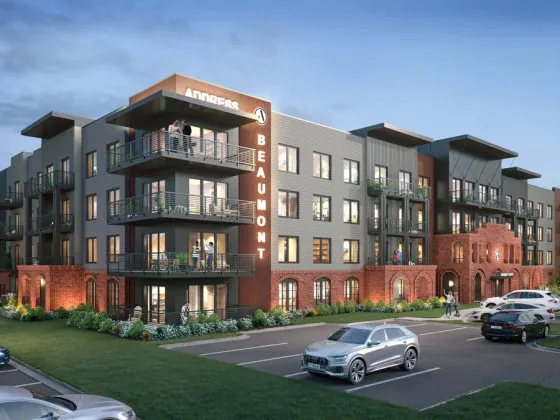
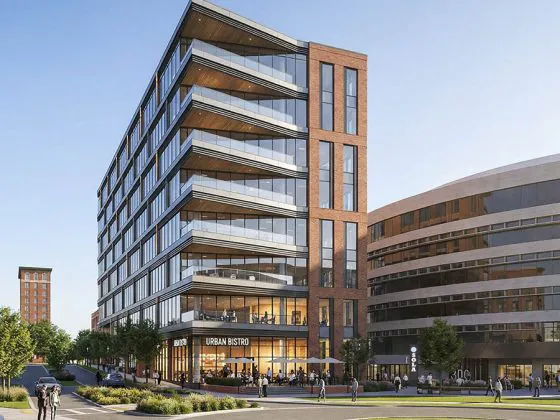
Q: Housing demand remains high, and many local planners are advocating higher -density and infill development. Do you think this will drive increased demand for more mixed-use projects in urban areas, or is the demand likely to be more widespread?
A: We expect housing demand to continue to create urbanization within the Upstate, and part of this will be evident through mixed-use projects. These types of projects are increasingly able to meet the needs of a range of residents while aligning with long-term city planning goals. Given the growth of the Upstate, there will also be a more widespread need for mixed-use projects outside of our dense urban areas.
Q: Are there technologies and construction techniques we’re likely to see more of in the near future, especially ones that may lower costs and increase production speed?
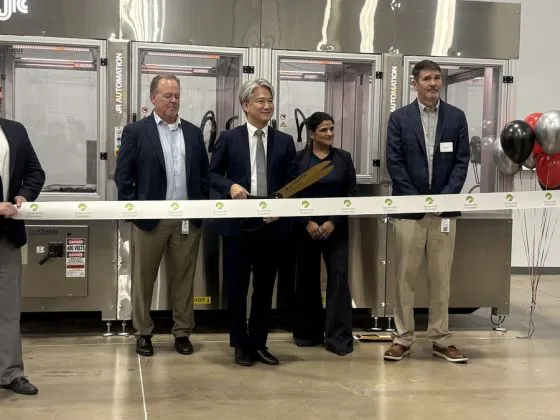
A: We are seeing an influx of technology make its way into the construction industry. Software development, virtual reality and artificial intelligence have ramped up innovation. Robotics is shaping several phases of construction, and more is to come. 3D printers are not new, but they continue to influence construction. Prefabrication will also start making a larger impact on the industry.
Q: The presence of a company like Timberlab in Greenville County points to huge potential growth in mass timber as a building material. Do you see any increased interest locally in the use of mass timber in projects?
A: We have been closely monitoring mass timber’s increasing viability in our region and look forward to its impact on Upstate construction. The system provides various benefits, from increased production speed to environmental sustainability. We have been studying this type of construction for some time and have traveled across the country — in addition to connecting with Timberlab in our backyard — to see its uses as it has become a viable option.
Q: Are there larger social trends at work shaping construction and how projects are designed and built? For instance, many people increasingly seem to spend their time away from home, whether at work or socializing. Is this influencing building design?
A: Community-oriented design projects are becoming more common as they allow for social interaction and the possibility of building community. People want to work, play and live in the same area as they do life together. While this influences design and construction, it seems bigger than that. How we establish neighborhoods and towns greatly influences development in general.
Q: Are supply chain disruptions and production times for supplies and materials still significant in the construction industry?
A: Supply chain disruptions are certainly not at the level they were around the onset of the pandemic and for the year or two that followed. Overall, things are better. Locally, the expansion of the Inland Port in Greer has played an important part in keeping our industry on track. Moving forward, we’ll continue to monitor for potential port strikes along the coast early in the new year if a resolution between groups negotiating for the ports and union workers is not reached.
Good to Know
Mass timber is a term used to describe a growing sector in the construction industry which uses wood, primarily glued laminate timber, as structural elements in building. Considered a sustainable and more environmentally friendly alternative to concrete and steel, mass timber can also be precisely machined by companies like Timberlab in southern Greenville County.