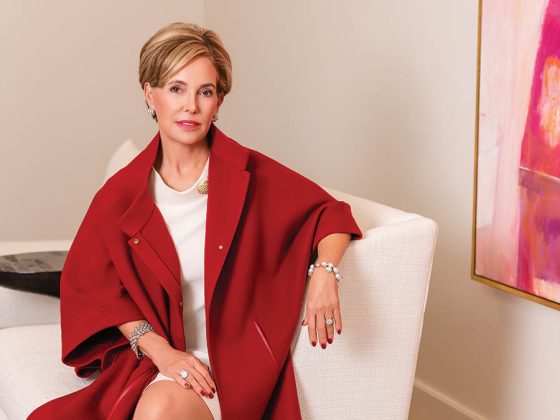
The Basics: Brenda Laakso
School: Kansas State University, bachelor’s degree, general physical sciences
Pets: two dogs, one indoor cat, four “adopted” strays, one gecko
Hobbies: Gardening, hiking, sea kayaking
Top kayaking spots: Tybee Island, Edisto
Recent book: Work by philosopher and poet Mark Nepo
Favorite spot in Greenville: Falls Park. “Even before it was developed, my husband and I would pack coffee and muffins and walk to the falls for breakfast.”
[break]
 Brenda Laakso helps fill the gaps for high-impact companies

As vice president of entrepreneurship at the Greenville Chamber, Brenda Laakso helps oversee NEXT, an economic development initiative launched in 2006. Designed to fill gaps in what she refers to as the entrepreneurial ecosystem, NEXT had 45 member companies by 2009, and this year is working with 128 businesses across the Upstate, from those in the pre-launch and startup phases to companies that have been operating in established markets for more than a decade.
“NEXT describes the profile of the entrepreneur we support,” Laakso said. “They are driven, and they are always looking for the next opportunity.”
Describe the role of NEXT in the Upstate business community.
NEXT is an economic development initiative focused on supporting high-impact, knowledge-based companies in the Upstate. By high-impact we mean they have national and international markets, and by knowledge-based, we are referring to companies that own the intellectual property of the product they sell. So from an economic development perspective, they are bringing new money into the region, and we want these companies to grow.
What are some services you provide for member companies?
We support them in three primary ways. First is infrastructure development – that’s where we’ve been busiest. We pull together business and community leaders to fill the gaps in the entrepreneurial support ecosystem – these can be facilities, capital, talent.
We also offer concierge services. We try to meet with each one to find out their immediate needs and determine how to support them – this can be getting exposure for a press release or rolling out the red carpet for top-tier talent. And third is public advocacy, educating the community on the importance of these companies and how they impact the economy, and also advocating for local, state and federal legislation that attracts these companies and incentivizes their growth.
Can you give some examples of projects NEXT spearheaded?
In 2007 we had 20-plus entrepreneurs approach NEXT about having a place to co-locate. NEXT took the lead in connecting them with city economic developers and a commercial real estate developer who would be interested in partnering with NEXT to create this type of facility, and the NEXT Innovation Center opened in 2009. [The 60,000-square-foot office at University Ridge is at full capacity with more than 25 businesses.]
A lot of these companies need early-stage capital, and we needed a formal vehicle to make it easy for entrepreneurs to identify investors, so two investors agreed to co-lead the creation of the Upstate Carolina Angel Network. We also applied for the license fee from TED so Greenville could launch its own TEDx in 2010.

What is your background – did you start out in economic development?
I enrolled in nuclear engineering at Kansas State University. I had read about a graduate in nuclear engineering who had 11 job offers, and I wanted 11 job offers. After two and a half years, I heard the career paths were working for a power plant or going into research, where you can spend your entire career never finishing the project you are working on. That statement was the killer.
So I went into technical communications and wrote operating instructions for power plants. I ended up working with NCR Corp., starting team-based organizations in manufacturing plants, and that brought me to the Upstate when I started working at an NCR manufacturing plant in Liberty.
When did you begin working with the Chamber?
When NCR closed their Liberty plant in 1995, I became a small-business consultant doing team-based training. In 2003 I joined the chamber as vice president for small business, and I was executive director at InnoVenture, the first venture capital conference in South Carolina. I was also helping [Chamber Executive Vice President] John Moore build the initiative called NEXT, and by 2010 I was able to work full time on NEXT.
What projects are next for NEXT? What are the most pressing needs?
There is the need for more facilities, and there have been several meetings and conversations about it. I’m sure the desire would be to have the locations downtown. Another need is talent. We’ve created a job board that allows entrepreneurs to post full- and part-time jobs and internships, and we market that regionally. We’re hoping to launch a mentoring program created by MIT 13 years ago called Venture Mentoring Service. We’re in the planning and fundraising stage. And then NEXT High School is raising capital to launch with ninth grade in fall 2015.
Business is dynamic, so our challenge is being able to identify the relevant needs of the entrepreneurs and making sure the ecosystem is dynamic enough to address those needs in real time.