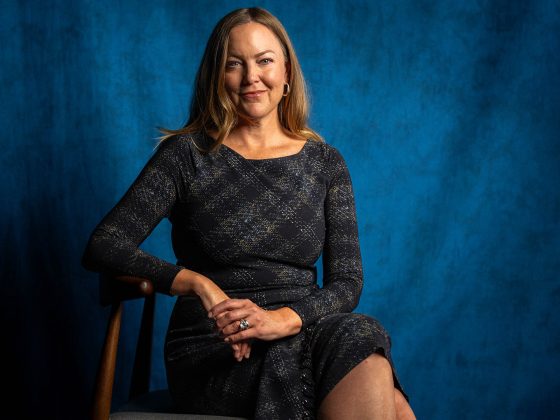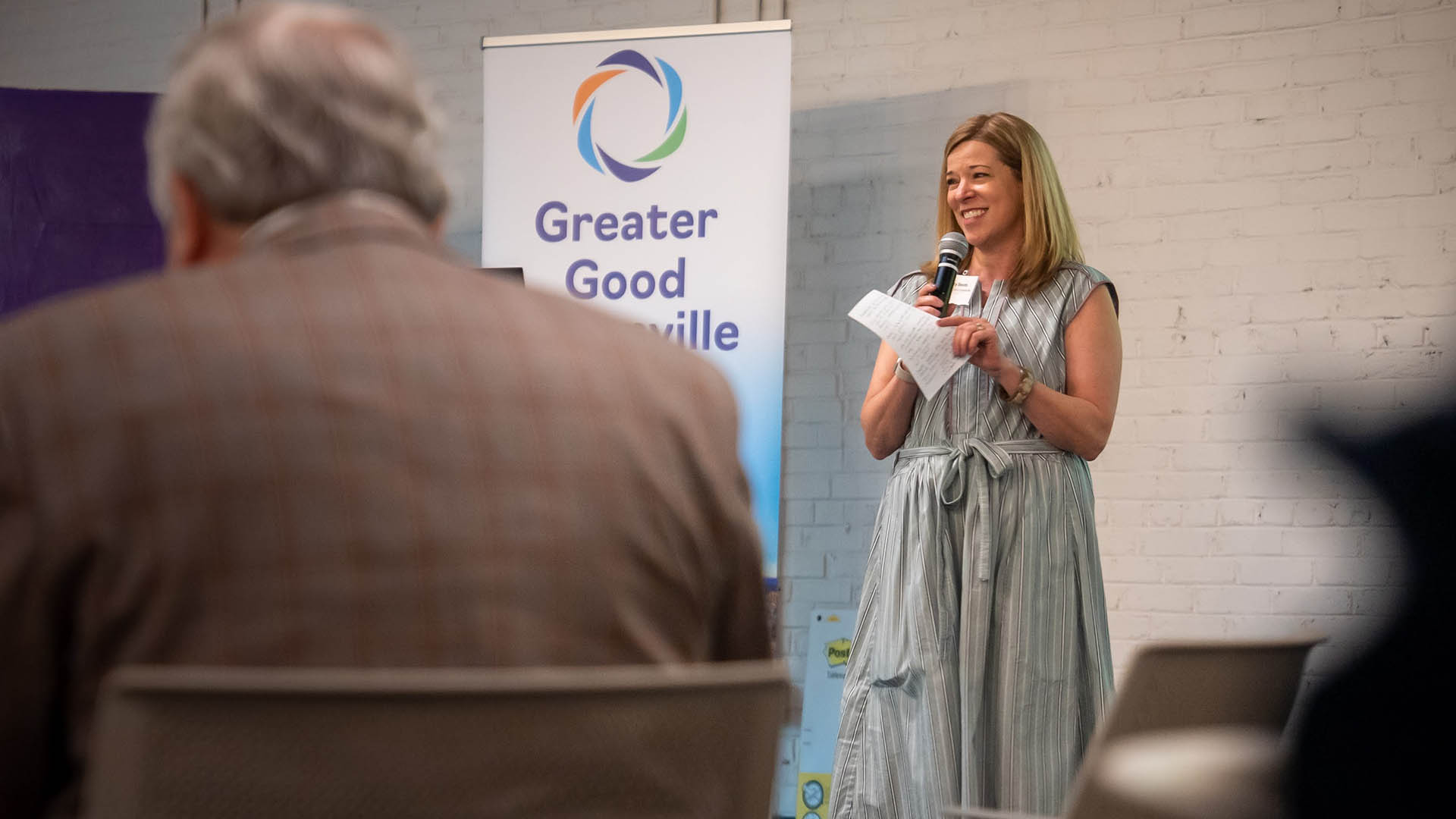
Katy Pugh Smith is executive director of Greater Good Greenville, which multiplies the good of nonprofit organizations, philanthropic funders and caring community members with know-how, resources, and connections to each other to address the community’s challenges.
She previously led Piedmont Health Foundation, the Greenville Partnership for Philanthropy and the Center for Development Services, and has served on numerous community boards. Smith is chair of the South Carolina Grantmakers Network. She has volunteered in positions from LEGO robotics coach to English as a Second Language tutor to PTA president.
She and her husband, Matt, a CPA, are both graduates of Wake Forest University, and she has her Masters in social work from the University of Georgia. They love spending time with their adult kids, a Clemson sophomore and an actor in New York City.
Explore more behind the brand stories
Behind the brand with Greater Good Greenville
Q. Greater Good Greenville’s Philanthropic Landscape Survey offered a good look at the state of giving in the Upstate. Hurricane Helene also demonstrated the area’s resilience in the face of a major disaster. What do you think these say about the civic-mindedness of our area and its people?
A. Hurricane Helene certainly revealed how fragile all of us are, especially those who live paycheck to paycheck and may have been without wages or fresh food during the power outage. But it also certainly let us demonstrate our civic-mindedness.
Neighbors helped neighbors start generators and clean up yards. Our nonprofit community rallied by distributing thousands of meals and food boxes, cutting trees, helping with FEMA applications, and more. Philanthropic organizations and individuals stepped up and gave funds to support all of these families and the nonprofits who help them.
It highlights the importance of civic organizations to facilitate our civic-mindedness. Entities such as American Red Cross, LiveWell Greenville, Meals on Wheels, Mill Community Ministries, Salvation Army, Soteria, Pleasant Valley Connection, Rebuild Upstate, United Ministries, Upstate Circle of Friends, United Way of Greenville County, and many many others were the vehicles through which we were able to donate and serve to demonstrate that civic spirit.
Q. Our area’s rapid growth in recent years has brought with it many challenges. Has this growth impacted the nature of the issues the nonprofit community seeks to address?
A. Most definitely. We’ve always had nonprofits that have helped with housing, utility bills, and other basic needs, but it has never been more difficult than it is now. Families are paying huge portions of their income for a place to rent, and properties that once were affordable are getting flipped into costlier residences for rental or purchase.
Nonprofits often report that clients may successfully complete a training program, meet all of their goals, and find better employment, but then still be unable to find an affordable place to live. Of course, rising housing costs impact people at all income brackets – but it’s those with the lowest incomes that are left with few choices as higher earners and second home buyers share this housing and rental market.
Q. With roughly 40 new residents moving to Greenville County every day, many newcomers may want to become involved in philanthropic work but might not know how to connect with the nonprofit community. How would you advise people who want to get involved?
A. This is the positive flip side to the challenges that growth presents. While growth has negative impacts, it also means there are people who loved something about Greenville enough to want to move here. We want to welcome newcomers to be a part of Greenville’s future.
In 2025, we’ll be offering opportunities for newcomers to connect to the greater good, including through a nonprofit directory we’re launching so folks can find organizations that fit their interests for volunteering and donating. Newcomers and longtime residents alike can learn more on our website at greatergoodgreenville.org.
Q. We live in polarized times and have experienced one of the most contentious presidential races in living memory. One of GGG’s core missions is to promote collaboration and civic engagement. Can you describe some of your organization’s efforts toward this core mission?
A. National politics get so much attention and energy, and of course what the federal government does is important. But we strongly believe that local and state government are just as important and can have a greater impact on day-to-day life. And it’s around these community-level issues that we can actually talk to each other and solve problems together. Unfortunately, far too few residents pay attention to their city council, county council, school board, or other lower levels of government.
That’s why one of our core programs is Simple Civics: Greenville County. It’s a weekly podcast that familiarizes listeners with how local and state government works, who the players are, and how they can get involved. A bonus is the episodes are short and to-the-point: you can listen to a full podcast on your drive to work or while walking the dog.
We hope it inspires community members to vote, support a candidate, or run for office, to apply to boards and commissions, to speak at public meetings, and to get involved in all of the activities that reflect our care for this community and each other.
Visit simplecivicsgreenvillecounty.org for information and listen on any of your favorite podcast apps.
Q. What words of encouragement would you offer for both the philanthropic community and for residents who want to join in the work to make our communities better?
A. Your donations, your volunteerism, your kindness to the people around you – these are small but significant things you can do for our community. At Greater Good Greenville, we aim to help people like you multiply their good. As you look to 2025, think of small ways you can multiply the good that you do next year for the causes and people you care about.
If we can help, let us know.