It hasn’t been an easy year for international business.
Last month, the European Union recommended U.S. visitors be barred from nonessential travel to all its member states due to rising cases of COVID-19. Three nations — Bulgaria, Norway and Sweden — have banned travel entirely, while other nations have indicated they may soon follow suit.
For the European-American Chamber of Commerce Carolinas (EACC-Carolinas), a Greenville-based nonprofit and non-political, membership-based organization, the goal is to help its more than 50 member companies navigate the bureaucratic and political tangles that have ensued.
Founded in 2016, the chamber focuses on promoting bilateral trade between Europe and the Carolinas. Executive Director Samantha Spratt said although the chamber offers networking opportunities, its primary goal is to provide valuable information through a program-driven approach.
“We really want to discuss topics that are of interest to the community, and of course there are a good number of topics that fit into that category,” Spratt said.
From legal issues to taxation, globalization versus de-globalization, intellectual property protection and more, the programs run the gamut depending on the most pressing issues of the moment.
For this moment, that issue is immigration.
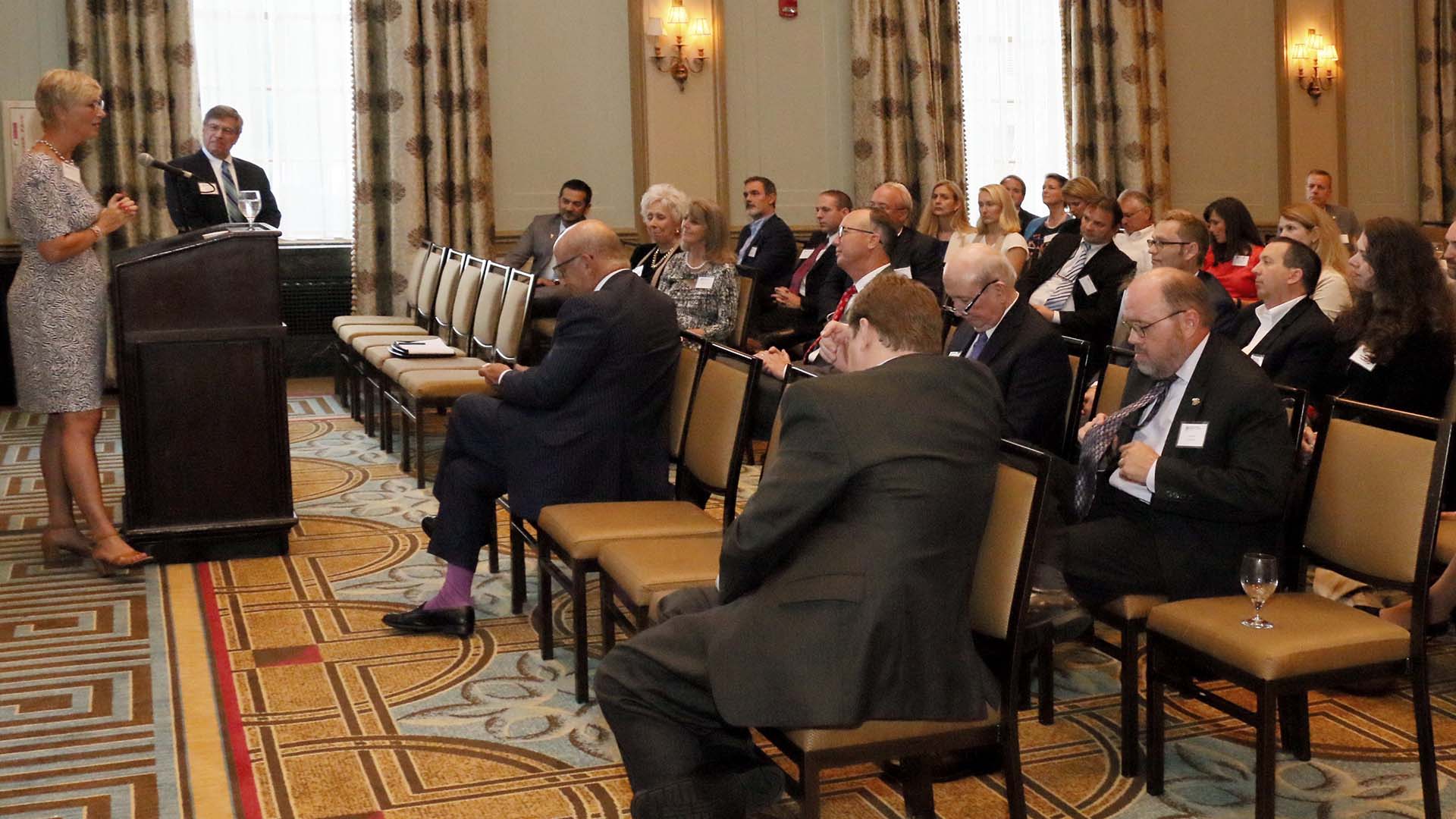
The chamber’s most recent program, a panel discussion and networking event titled, “Immigration Law and Travel Restrictions Update,” broke down how the new presidential administration and the ongoing pandemic are impacting international travel and employee transfers.
“First, there’s a hangover effect from the increased scrutiny by way of the Trump administration, one that’s still lingering within the immigration service agency,” said business immigration lawyer Christian Herrmann. That delayed processing has mostly impacted dependent applicants in circumstances wherein employees bring their family members along with them, he added.
“In some instances the spouse can get a work permit, but these work permit applications are taking extraordinarily long periods of time,” he said.
The second challenge is obvious: COVID-19 travel restrictions.
“I wouldn’t say it’s an outright inability to travel [to nations that have banned nonessential U.S. residents], but it’s close to that,” Herrmann said.
Assuming travel restrictions are reinstated across Europe, companies are left with essentially two options, neither of which are guaranteed to work.
The first is to get a national interest exception approved with the prospective host nation’s consulate, but getting that approval requires an appointment. Considering the latest appointments are only available in the middle of 2022 on average, Herrmann said companies must seek an expedited appointment if they want to actually get their employees overseas in less than a year.
“It’s a cumbersome, bureaucratic process,” he said.
The second option sounds easier on paper but is far more of a dice roll. Employees can visit a third party nation that is not on a travel restriction list — Mexico, for example — and then spend two weeks there before flying into their final European destination.
“In some instances, however, they have to apply for a visa, so they need to be at a U.S. embassy or consulate somewhere,” he said, “and historically, the government has said you need to apply in your own country.”
Which renders the whole process moot.
The overall assessment presented by the EACC-Carolinas is that the issues remain in flux, but Spratt said the chamber will continue to do all it can to build connections between the Carolinas and Europe.
“And if we don’t have answers to a particular issue, we take that as our motivation,” Spratt said. “We do the homework and find out how to make these connections happen.”