It won’t be long before a new generation of F-16 Fighting Falcon fighters begins gliding off the assembly line at Lockheed Martin’s 275-acre site at SCTAC — the South Carolina Technology & Aviation Center — in Greenville, the global home of the aviation giant’s F-16 effort.
The company expects to deliver the first jet, now in the final assembly and checkout process, to the island nation of Bahrain by mid-2023, according to Lockheed Martin Communications Lead Leslie Farmer.

Hitting the afterburners
From there, production rates will jump dramatically as the company looks to deliver multiple jets to Slovakia and Bulgaria too.
“Delivering the first South Carolina-produced, most advanced F-16 ever built will be a testament to our incredible team and partners and the culmination of years of hard work and dedication,” says Danya Trent, Greenville site lead and vice president of F-16 programs. “We are so proud that the work we do in Greenville supports our national defense and allies around the world, and this milestone will represent a truly historic accomplishment in the F-16’s proven and powerful legacy.”
Several countries, including Slovakia, Bulgaria, Bahrain and Taiwan, have ordered about 130 of these jets, all of which will be built in Greenville.
A prolific platform
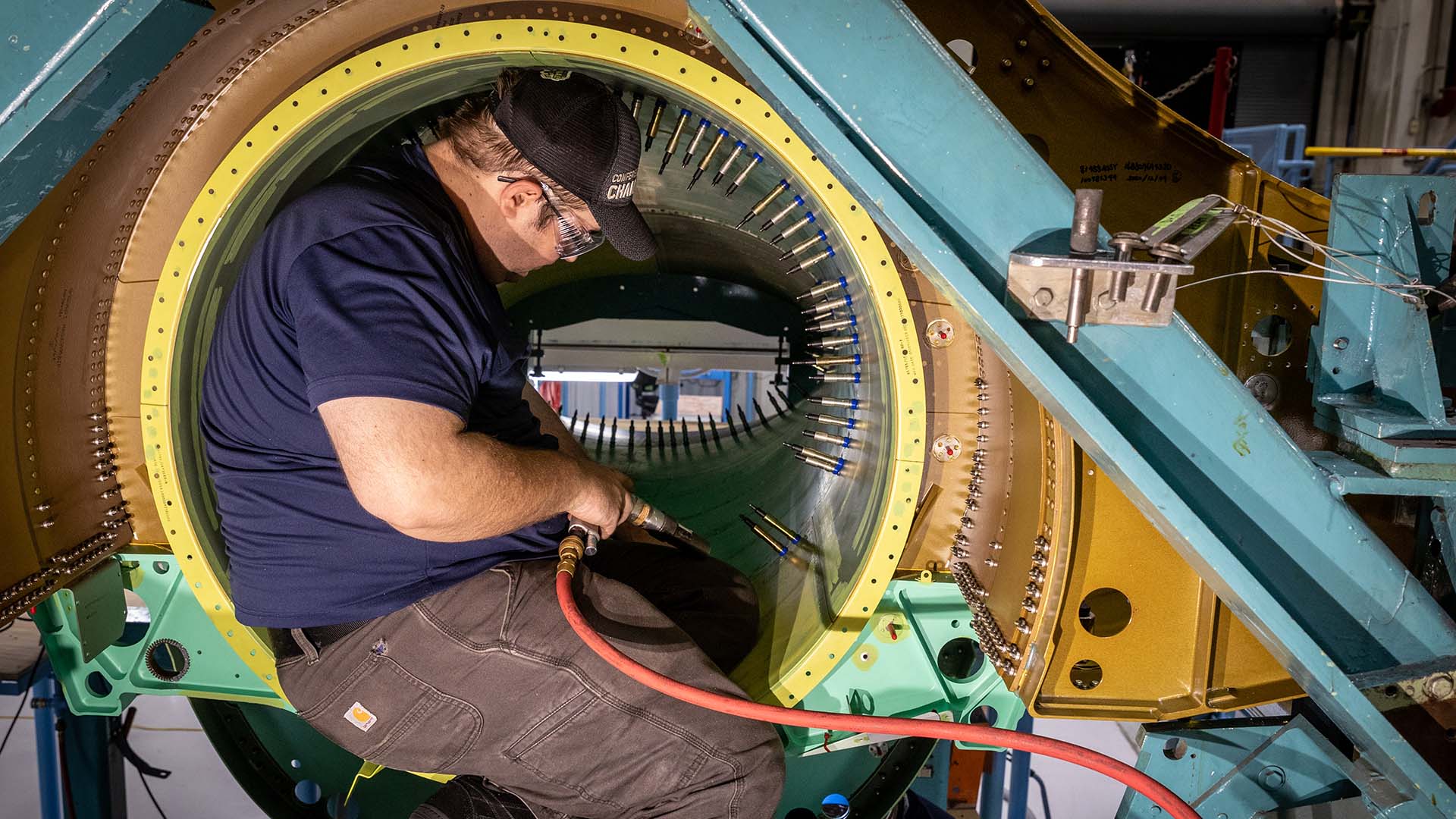
F-16s have a storied history in global aviation.
These proven multirole fighters have logged almost 20 million flight hours across more than 13 million sorties in their 40-year history, according to Lockheed Martin, which estimates there are more than 3,000 Fighting Falcons operating in 25 countries.
The new F-16 (referred to in the industry as the “Block 70/72” model) is considered the most advanced fighter of its generation ever built, bringing a new level of capabilities to the air forces that are buying them. They’ll also last longer, according to information provided by the company, with a structural service life of 12,000 hours.
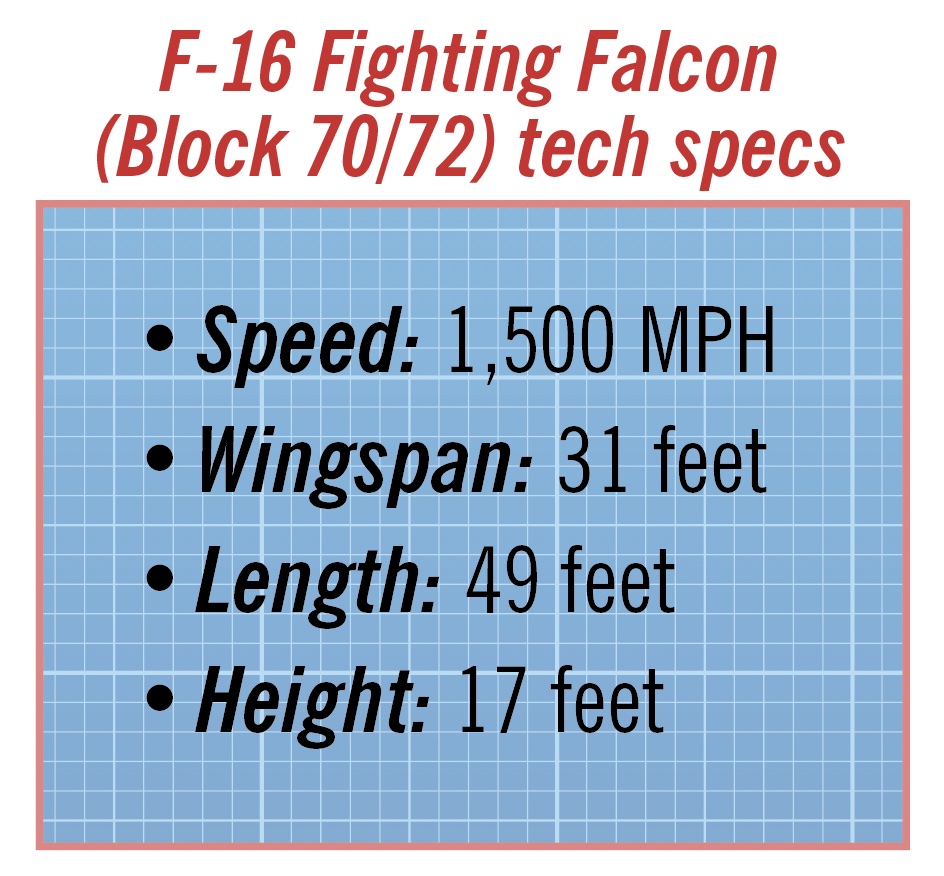 Other new features include:
- Upgraded avionics
- Safer cockpit
- Conformal (fitted to the body) fuel tanks
- A higher-performance engine

An economic engine
Overall, Lockheed Martin has added about 300 new jobs since last year in support of the Block 70/72 production, bringing the total to more than 1,100, according to a company release. This translates into $83 million in payroll and about $100 million in average local economic impact, according to figures provided by the company.
“The full production process, including upfront supply chain work, flight tests and delivery to the customer is a multiyear process, consistent with other aviation manufacturing industries,” Farmer said. “We have hundreds of employees across supply chain, manufacturing, engineering and [other areas] who support F-16 production.”
 Did you know?
Lockheed Martin’s Greenville team doesn’t just build Fighting Falcons; they provide long-term support to them, too. They also support the Lockheed Martin C-130.