
Kyle Duford, president and executive creative director at Greenville-based The Brand Leader, props a sneaker-shod foot on the corner of his office coffee table and receives the fresh, unopened Diet Coke with gusto.
“Love you, brother,” Duford says to Matthew LaPenna, the full-service marketing agency’s 22-year-old director of photography-turned-facilitator of Duford’s midafternoon refreshment.
“I didn’t know you were coming in today — you’re a godsend,” Duford says, cracking open the soft drink. “Thank you.”
More than a Coke and a smile
That tiny gesture, Duford says, reflects The Brand Leader’s entire ethos: no silos; no one saying, “It’s not my job.”
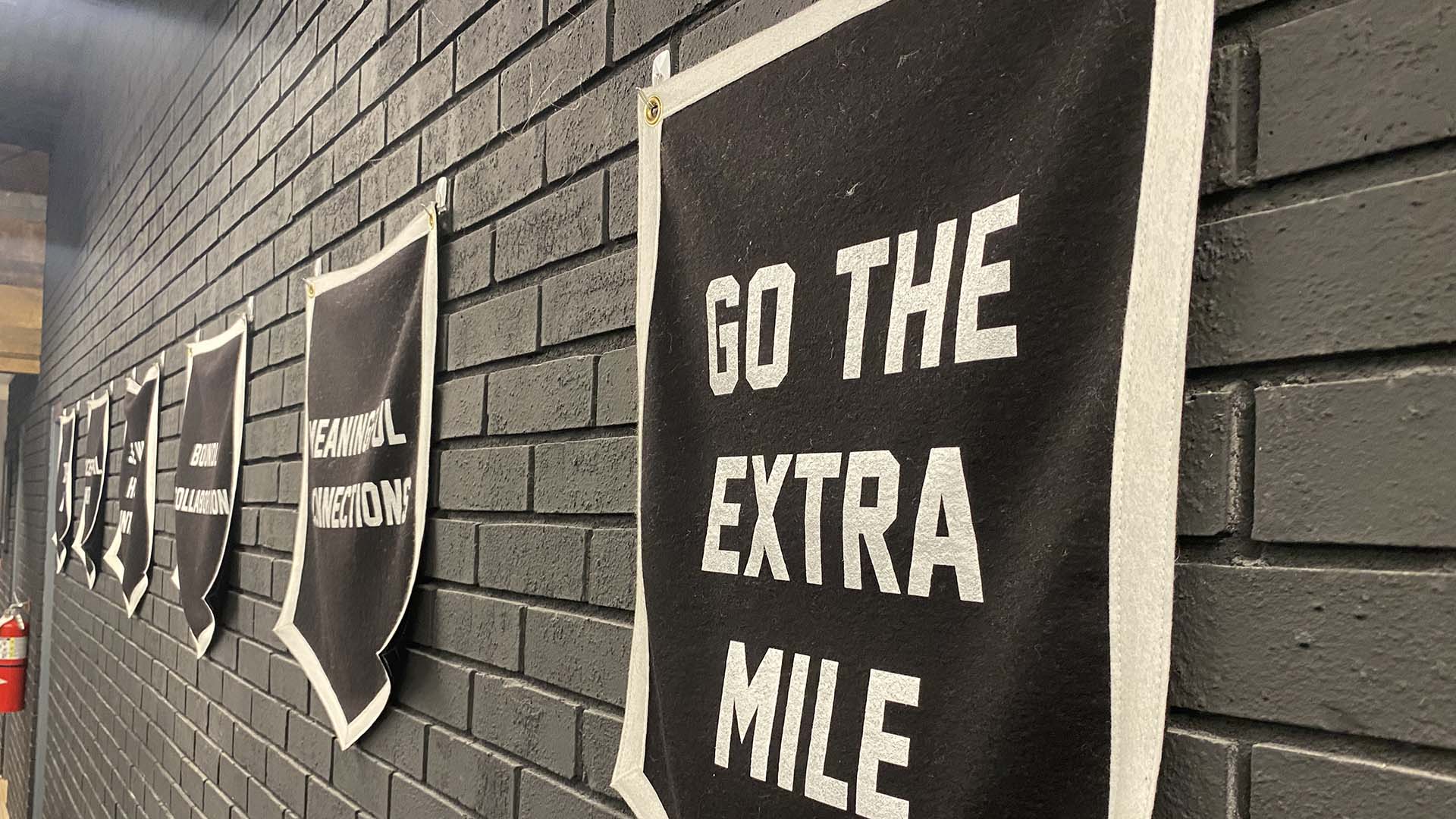
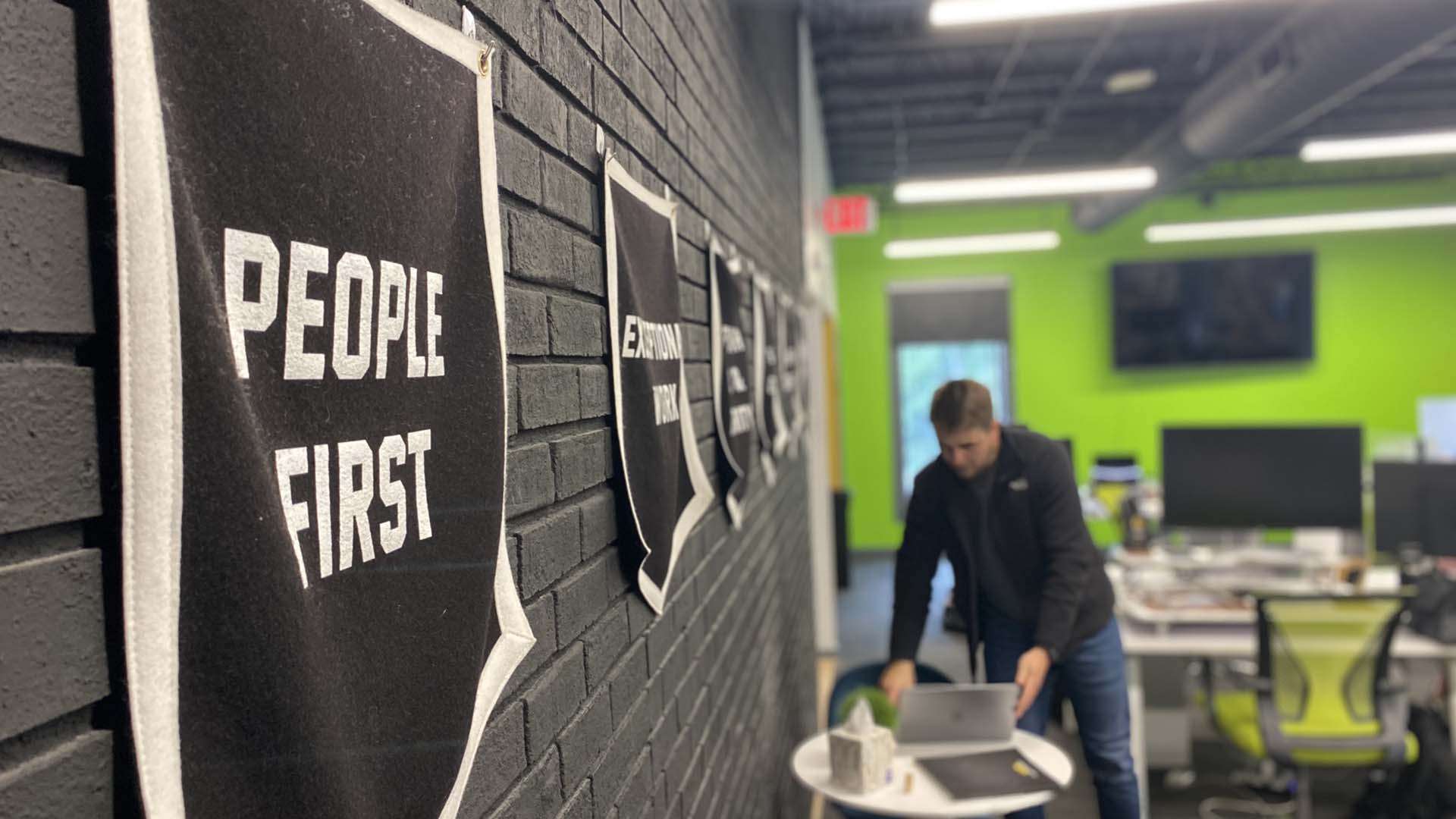
“If the spirit of this place is people first and trust, grace and love, the engine of it is boundless collaboration, where everyone here works for the betterment of the whole,” he says. “They want to see each other succeed. I’ve never seen anything like it.”
And it’s a big part of why Ad Age named The Brand Leader to its coveted 2023 Best Places to Work list, an honor bestowed on companies that peg the needle on everything from compensation and benefits to corporate culture and leadership.
For Duford, it’s more than all that.
He refers to a late 2022 interview of Bono, of the legendary Irish band U2, with Christianity Today.
“Bono said, ‘I see Jesus in everything, and we give glory to him all the time, even if we’re not saying it,’’ Duford says. “And I was like, ‘Well done.’”
Yes, Duford is a man of faith. But he’s also running an agency.
“We’re not a ‘Christian’ agency,” he’s quick to say. “We’re an agency.” But he’s quick to acknowledge it’s about more than the work.
Culture coding
“My job is to build men and women of character,” he says. “The bonus is that we get to do amazing advertising and brand work along the way.”
Because the Ad Age award is based on anonymous employee feedback, Duford is comfortable with what it represents of the 40-or-so-member agency that counts heavy-hitting brands like Hincapie, PowerBar, Denny’s and Spero Financial among its clients.
Duford joined The Brand Leader — founded by CEO Geoff Wasserman in the late ’90s — in late 2019 with a strong agency background as the head of digital. He then became agency director, then executive creative director before rising to president and executive creative director.
He refers to Daniel Coyle’s “Culture Code,” and the idea that any cultural tenet must begin with safety.
“If people aren’t safe, they’re not going to do good work,” he says. And with Gen Z soon to occupy the largest portion of the American workforce, adapting to meet their needs is key.
“They’re worried about mass shootings, the economy, diversity, immigration, housing … things we didn’t have to worry about,” says Duford, a Gen Xer. “Our emerging workforce is dealing with that, and as leaders, it’s incumbent on us to provide a safe place where they can be themselves, be safe, be authentic, be trusted, enriched, loved and taught.”
And it goes beyond pay and other perks like unlimited PTO, work-from-home options and no-questions-asked mental health days, says Madeline Makowski, a just-out-of-Clemson copywriter.
“Culture was really important to me,” she says of her decision to join The Brand Leader over other suitors. “But I don’t mean ‘culture’ in terms of pingpong tables and beer taps. I mean culture — an ethos — where I’m supported personally and professionally. Where I’m pushed to be my best.”
LaPenna says other agencies tend to focus more on the work and less on the people.
“I used to work at another agency and left because there was just no culture. It was just ‘get your work done,’” LaPenna says. “But here, I enjoy coming to work. I feel like we’re kinda doing life together. This is a place where, aside from work, I feel empowered to do what I want to do as well as I can.”
Duford says it has taken years to put language to his idea of “culture,” but lately, it’s come into focus: trust, grace, empathy, acceptance, rituals and recognition, and transparency and vulnerability.
“With kindness at the center of it all,” he says. “It’s this compassionate culture.”
Culture wins
It isn’t without tension.
Just that morning, Duford had announced a staff reduction attributed to over-investment in a particular product line that hadn’t seen the growth needed to sustain it.
“It really, really sucks,” he says. “The anxiety is telling a room full of 40 people that you messed up, and then asking forgiveness, and then realizing people are questioning things.”
And in that fulcrum moment — the one where culture meets cash flow — culture leveraged up.
“I said this morning, ‘I own this. Maybe I bit off more than I could chew. Maybe I shouldn’t care about you guys as much as I do. Maybe I should chase profits over people. Maybe I should be more business minded. But I don’t want to run a company like that,’” Duford says.
He says he cried, and his team cried.
Because while business is still business — and results are required — Duford says there’s room for vulnerability from the C-suite.
“It’s kind to be honest,” he says. “It’s kind to be bold. It’s kind to be brave.”





