By Dean Hybl, Executive Director, Ten at the Top
As we exit a decade that began with higher than 11% unemployment in South Carolina and enter one with an unemployment rate under 3%, there is no question that our priorities and areas of focus for 2020 and beyond will be quite different than they were 10 years ago.
Over the last couple of years, we have started to see a shift from a primary focus on attracting jobs for available workers to developing, attracting and retaining talent to fill available jobs. We also now must place greater emphasis on reducing the barriers to employment for people living in the Upstate who are unemployed or underemployed. These include:
- Transportation/mobility.
- Education/skill training.
- Cost of housing outpacing wage increases.
While all three of these issues are critical and justifiably have many Upstate entities working to mitigate them, at Ten at the Top we have spent the last two years working most specifically around bringing together stakeholders from across the region to address issues around transportation and mobility.
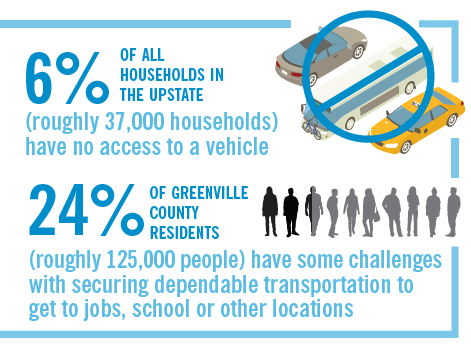
It is estimated that 6% of all households in the Upstate (roughly 37,000 households) have no access to a vehicle. In Greenville County alone, 24% of all residents (roughly 125,000 people) reported that they have some challenges with securing dependable transportation to get to jobs, school or other locations.
With the unemployment rate now near a record low, this barrier to employment doesn’t just impact the individuals that do not have access to transportation — it impacts the entire Upstate economy.
Over the last decade the Upstate secured more than $17 billion in new corporate investment. The jobs created through that investment are a significant reason for our current low unemployment. If we are to continue to grow the economy in the Upstate, removing lack of transportation as a barrier for potential employees is critical. In addition, mitigating congestion, regular road maintenance and enhancing the general movement of people and goods across the Upstate must also be addressed.
While studying the challenges here in the Upstate and looking at the approaches in other communities across the country, one thing has been certain: There is no silver bullet to fix transportation and mobility issues. Instead, there is a need for a multiple-front approach with different elements of mobility each playing a vital role in reaching success.
An essential action was taken in 2017 with the increase of the state gas tax to help ensure sufficient funding to repair and maintain roads within the state. However, that was simply the first step toward improving mobility.
 Improving public transportation, providing regional transportation connectivity, utilizing technology to mitigate congestion and increasing opportunities for alternative transportation such as biking and walking are among the other elements needed to improve mobility and increase access to transportation.
One recommendation that came out of our study of mobility was the need for a group to connect the many different mobility efforts happening across the region. That has led to the creation of the Upstate Mobility Alliance, which officially began efforts in January following the hiring of Michael Hildebrand as the alliance director.
The role of the Upstate Mobility Alliance is to help continue to grow collaboration among the more than two dozen entities that play a role in the movement of people and goods across the Upstate so that we are maximizing the limited resources within our region and leveraging the capabilities of all who are part of our mobility spectrum.
As a sign of what is possible when we work together and our corporate partners invest in our region, the Michelin Corporate Foundation has committed $825,000 to enhance mobility in the Upstate through a grant awarded to the Upstate Mobility Alliance and Greenlink to help support increased access to public transportation.
It is our hope and expectation that this will be just the first of many announcements in the near future of how we can leverage public-private partnerships to reduce access to transportation as a barrier to economic success for all individuals and businesses in the Upstate.
Check out the Upstate Mobility Alliance at www.UpstateMobilityAlliance.org to learn how you can become involved in enhancing mobility in the Upstate.
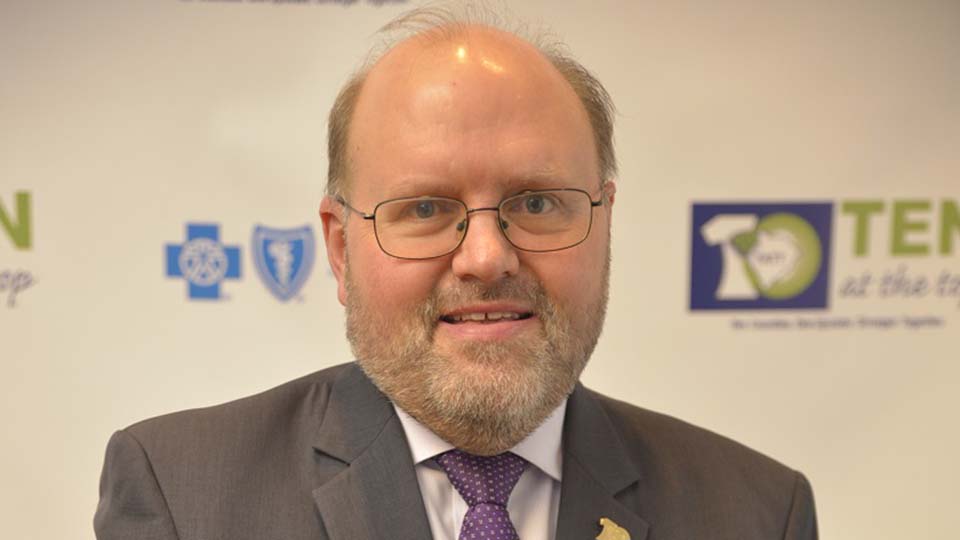
As executive director of Ten at the Top since 2010, Dean Hybl helps fulfill the organization’s mission to foster collaboration and regional partnerships around issues that impact economic vitality and quality of life in the Upstate.