
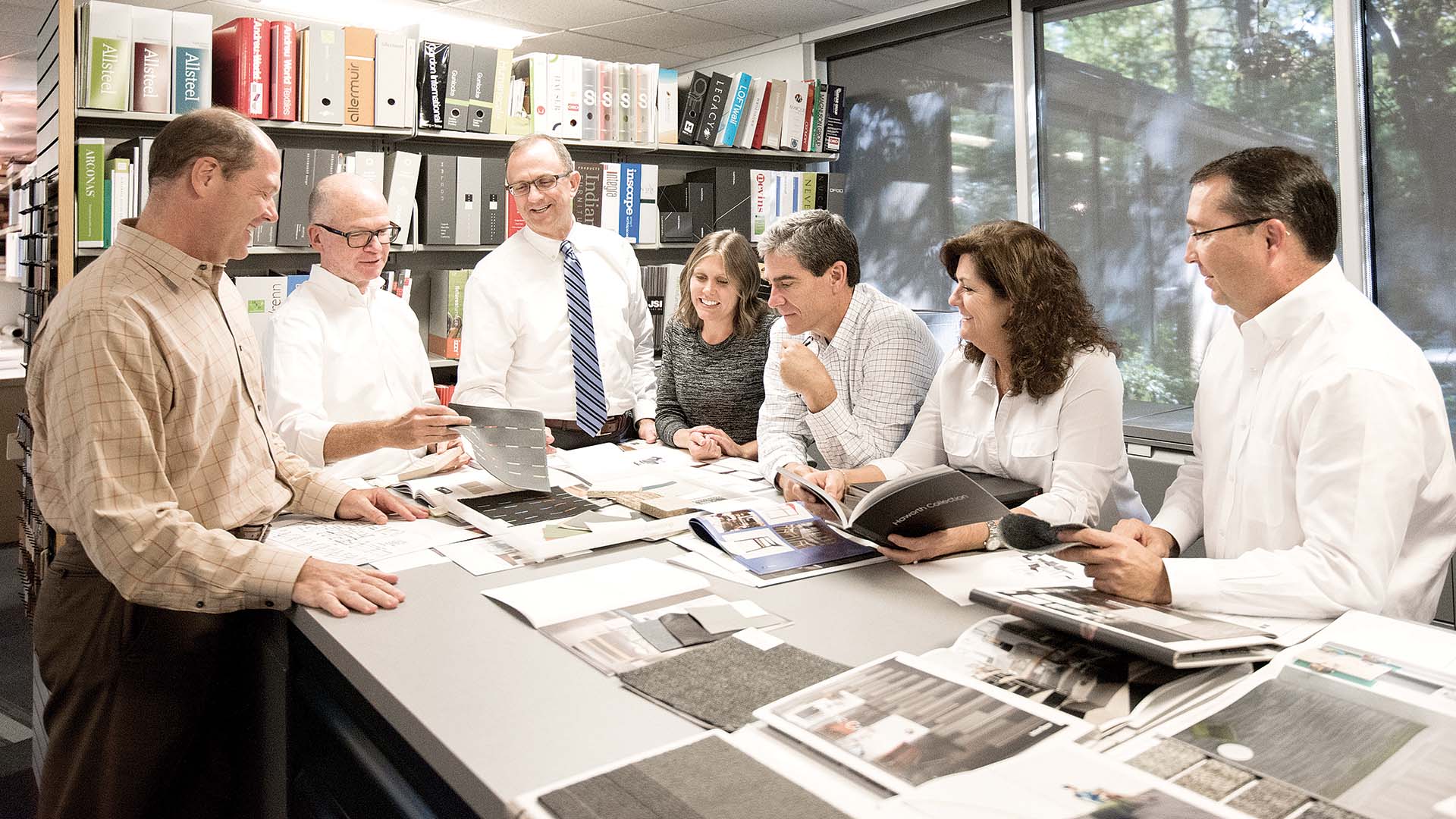
In a firm that sees itself as a multigenerational family, a typical day at the office finds freshly minted architects and longtime principals dropping in on each other to bounce around design ideas.
David Dixon joined the venerable Craig Gaulden Davis practice 35 years ago and these days gets a kick out of its next-gen leaders when they see what’s in his light-washed space.
“All the young people come in and go, ‘What are those?’” says Dixon, CGD’s board chair. “It’s a whole carton full of colored pencils, and I said, ‘Well, that’s the tools that we used to work with.’”
 To mark the firm’s 65th anniversary, he and fellow principals, Scott Powell, who started there 28 years ago and is now president and CEO, and Ed Zeigler, past president, with nearly 39 years at the firm, handle a lot of business via Zoom calls.
“Ed and David and I still sketch and draw, and the young people want to work on a computer, which takes a lot more detail,” Powell says, “Some of these young people, their renderings and the technology skills, are amazing.”
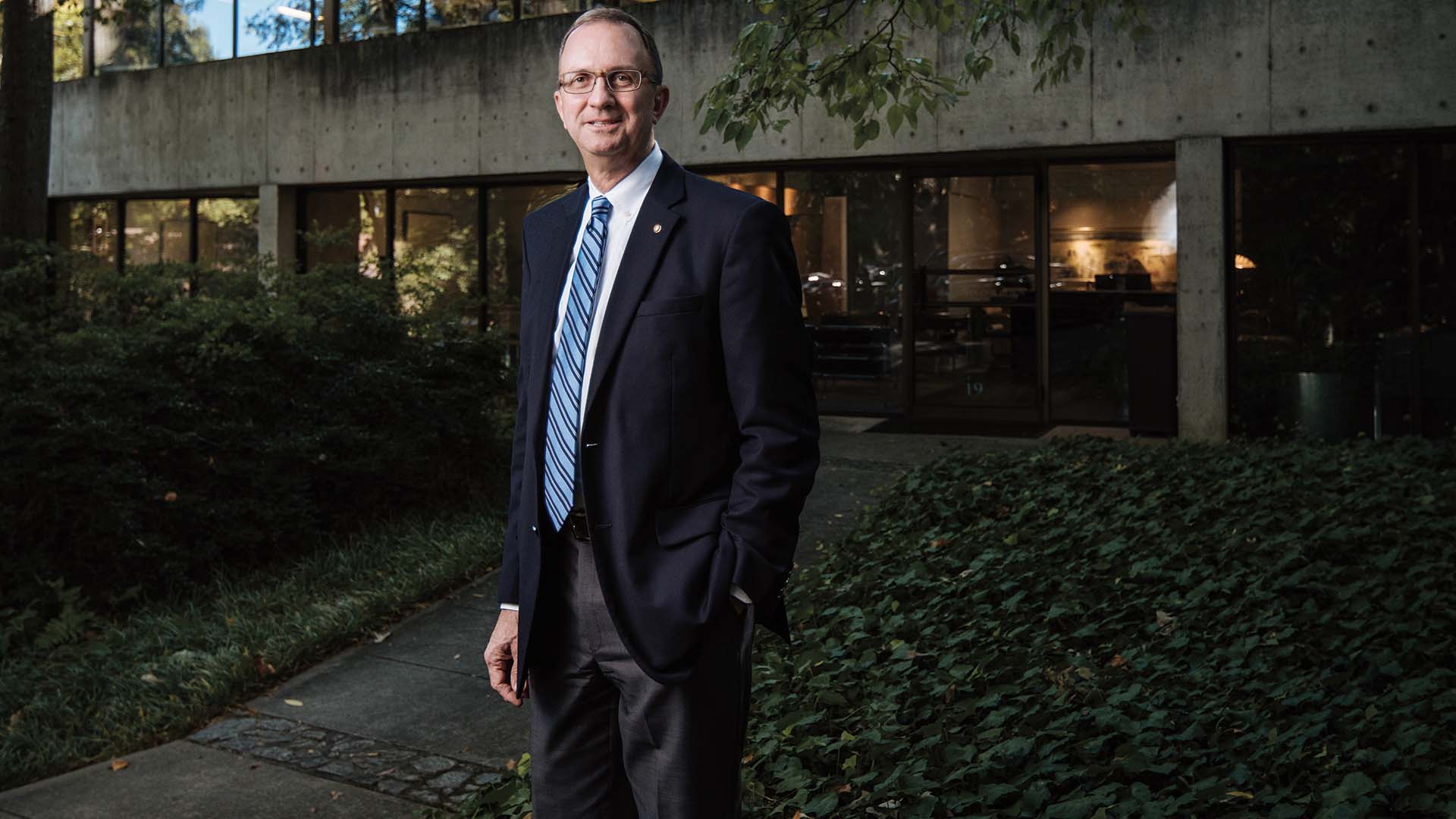
Through six-plus decades of tech evolution in design creation and construction materials, CGD continues the legacy that two Clemson classmates started in 1957, when Earle Gaulden and Kirk Craig, both 27 at the time, opened Craig & Gaulden Architects. Bill Davis joined in 1966 and became partner in 1968, and Craig Gaulden Davis was born.
The firm completed one of its first marquee projects in 1967: Greenville Little Theatre, now Greenville Theatre. Nowadays, you can’t look at the city’s cultural scene without seeing CGD’s artwork, including The Peace Center, The Greenville County Museum of Art and the South Carolina Children’s Theatre, among others.
SCCT’s executive director, Debbie Bell, says the architects treated her as part of the team until the $14 million theater opened in 2020. They welcomed her to weekly meetings onsite, where she wore a pink construction hat, she says, then adds:
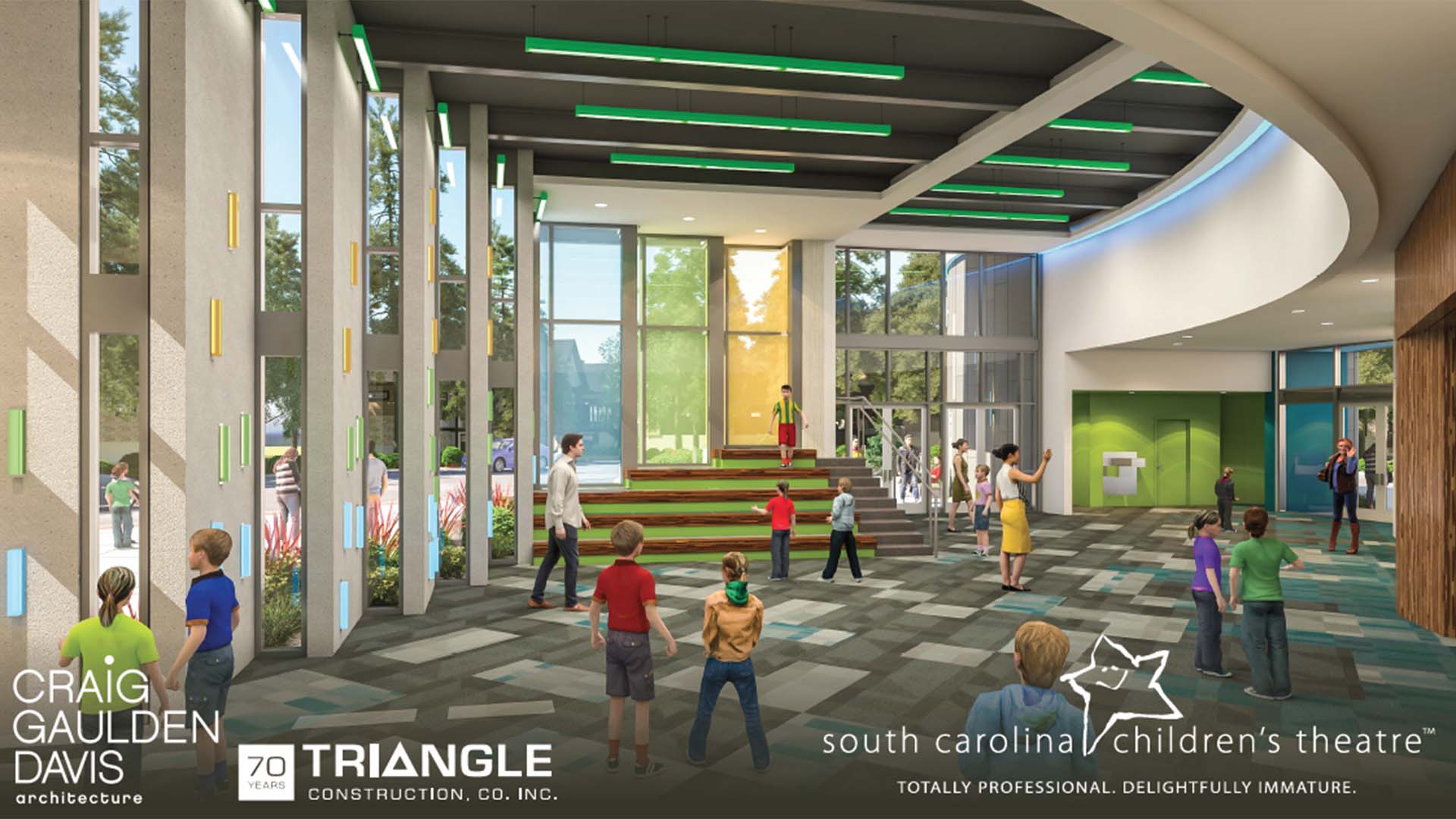
“They care so much about who we are and what we do, and they believe in our mission. You can’t help but have a wonderful project when we all cared so much about each other.”
CGD’s 25 employees build an industry-stretching portfolio that showcases, among others, schools, corporate buildings and religious and health care facilities. To name a few, those include Kroc Center Greenville, Laurens County’s historic courthouse, the new Southern First Bank headquarters at Laurens Road and Verdae Boulevard, and the Roper Mountain Science Center.
That last project began in the 1970s, when CGD worked on a master plan and last year completed — and earned an award for — RMSC’s Environmental & Sustainability Building. Same with Brookgreen Gardens in Myrtle Beach, where the firm created a visitors experience center 30 years ago and returned in 2017 to design a conservatory.
Such long-running projects mirror the firm’s commitment to continuity outside and inside its tree-shrouded office building near Cleveland Park.
“We’ve been very careful to extend the legacy that we each came up through,” Zeigler says. “And we’ve chosen people to be the leaders to take the firm forward, to pass that DNA.”
CGD’s 100-some projects each year in the Southeast and mid-Atlantic generate between $5 million and $8 million in annual revenues, Dixon says. And while the firm opened an office in Baltimore in 2018, the three say GCD plans to stay where it is, geographically and size-wise.
“A lot of firms are all about growth and being large,” Zeigler says. “When you get too big, you lose the principals’ involvement, you lose what we call gray-hair knowledge.”


