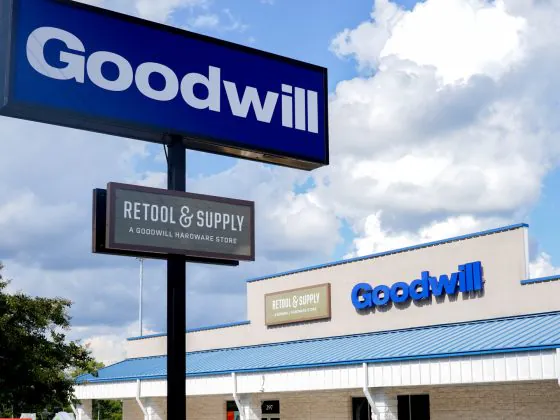
Local retailers strive to lure shoppers away from the big boxes and online – and keep more dollars in the Upstate
Shop Small Saturday gives locally owned retailers a potential sales boost – and a shout-out for social and economic benefits their dollars bring to neighborhoods.
Started by American Express, Small Business Saturday, now in its fourth year, has become a major Thanksgiving promotion, sandwiched between two competing events: the big-box stores’ Black Friday and the Internet’s Cyber Monday.
Tiby Weinstein, who has co-owned Gage’s gift and stationery store on Augusta Road in Greenville for 29 years, sees the appeal of Shop Small as putting “a face on small businesses” and their bedrock place in vibrant communities.

“To me the biggest question of all is, if we don’t have local brick-and-mortar stores, what will the fabric of a community be like?” she said. “We can’t all be warehouses and click-and-shop. Where are the jobs going to be? In a consumer-based economy, if you don’t have a job you are not consuming products. That’s one of the biggest dangers.”
Independent retailers put back nearly four times as much of their revenue into their local communities as chain stores, according to a compilation of nine studies by the American Independent Business Alliance.
The AIBA studies show chains recirculating 13 percent of their revenue locally compared to 48 percent by independents. American Express estimates that 52 cents of every dollar spent with local businesses stays local.
“Locally Owned, Period”
That is a compelling reason to buy from locally owned enterprises, said Charles Scales, president of family-owned Greenville Office Supply, which is in its 45th year.
“Obviously, you can’t buy 100 percent of everything locally,” he said, “but you should try to buy it first locally.”
What disturbs Scales are those who “believe just because a Staples or a Wal-Mart is down the street, they consider that local. They are not local at all. Local to me means locally owned, period. There is no other definition.”
Weinstein said the Buy Small campaign promoting commonweal advantages of spending local over spending with distant corporations “explains it pretty clearly. It is just a question of believing it.”
She told of a conversation with a woman who fills her car twice a month at Costco because it is three cents cheaper.
“I said, ‘It doesn’t take 20 gallons, so for $1.20 a month you would like for Costco to have that business as opposed to the guy you’re going to call when your windshield wiper has flown off on Augusta Road?’”
Boost for Holiday Shopping
Small Business Saturday was begun by American Express in 2010 to give small retailers and restaurants a boost to start the critical holiday shopping season between Thanksgiving and Christmas.
AmEx offers cardholders who register in advance a $10 credit on their bill when they spend $10 or more at a participating store. In the prior three years, the credit was $25.
Scott Krugman, a spokesman for American Express, said the credit was reduced to make it available to more people. “The budget was not changed.”
AmEx does not disclose the number of cardholders it registers to use the credit on Shop Small Saturday but Krugman said it is in “the hundreds of thousands.”
“Whether it is $10 or $25, it is nice to support small business,” said Rush Wilson of Rush Wilson Limited, an upscale men’s clothing store in business in Greenville since 1959.
Wilson uses Facebook and email to remind customers of potential savings by using their AmEx card. In the first year, he said, customers “did it by accident,” with greater public awareness in the second and third years increasing the numbers.
“Did it increase our business? I can’t tell you that. Our business has increased, but it is just probably a small piece of it.”
 The Anti-Black Friday
Wilson particularly appreciates that Shop Small Saturday picks up small businesses coming as it does after Black Friday when “all the promotions you see are for all the big-box stores.”
Musette Stern, owner of Muse Shoe Studio on Augusta Road, is a participating Shop Small retailer and, like Wilson, can’t say “we got considerably more business” because of it.
Just as important, she said, is the message that buying from a local shopkeeper is the right thing. “It feels better and helps our economy when you are part of the economy you live in.”
As grateful as she is for one day once a year, Stern wishes it “could stay all year or all week or at least as a reminder through the holidays.”
Shop Small has grown in terms of participating stores, shoppers and dollars spent. AmEx estimates 100 million consumers spent $5.5 billion on Shop Small Saturday last year.
It has gained major encouragement from business associations such as the U.S. Chamber of Commerce and the National Federation of Independent Businesses, and Twitter, FedEx and the U.S. Postal Service offer incentives for advertising and shipping.
Small retailers have long lived with competition from chain stores in malls, using personal and tailored service, product familiarity, ease of access and neighborhood visibility to their advantage.
Greater Concern: Online
As Stern of Muse Shoe Studio put it, “The department stores never worry me. My customers like shopping at small stores. They avoid the mall. They like to shop where they know the culture and are not taking a risk.”
Of greater concern is the growth of online shopping, particularly among younger generations who use their computers, pads and smartphones to shop at any time, anywhere.
“I think the virtual shopping experience is going to be all that some 20-year-olds ever know. I am concerned about that from a community standpoint,” Weinstein said.
Greenville Office Supply is the quintessential local business battling box stores for office product business throughout the Upstate and into North Carolina. It is family-owned, and Charles Scales’ three sons represent third-generation management.
GOS has 50 employees “all full-time, all provided with health benefits, 401(k)s, everything,” and its employees are long-tenured. The average in customer service is 15-18 years and 12-15 in delivery, Scales said.
“I’m a big proponent of trying to buy as much as we can from local vendors,” he said. “We try to support our community, as I hope they will support me.”
He can’t fathom “why another owner of another business doesn’t believe in that 100 percent. There are many that don’t believe in that, and they rely on their local business to shop their businesses.”
Can the Chamber Help?
Scales, Wilson, Weinstein and Stern believe an organized and sustained campaign promoting the benefits of buying local would help, but it is something they can’t do alone.
“It seems to me that it is important for the business leaders to puzzle it through,” said Weinstein. “I am sure there are great programs in places, best practices we should be investigating. I don’t know where they are, and honestly I only have so many hours in the day.”

Scales believes that responsibility is inherent in the historic mission of chambers of commerce, the first of which was founded in France in 1599 as a way for tradesmen to help one another.
His company is active in chambers in Spartanburg, Greer, Easley, Anderson, Laurens and Greenwood that have “active programs” to promote buying local. “They do what they say. They are proponents and buyers of our products.”
After 40 years with the Greenville Chamber, Scales dropped GOS’s membership about five years ago when the chamber replaced GOS with Office Depot as its own supplier and preferred provider to members. (Early this month, Office Depot and OfficeMax merged, creating the largest office supplier with revenue of $17 billion.)
“I can’t sit here and have a double standard, say ‘I want to support buy local, I support it,’ but I don’t do it,” he said.
Chamber Defends Big Boxes
To Scales, the chamber’s position of putting box stores on an equal footing with locally owned companies in terms of its own purchasing is wrong, even if the box stores have a local presence and chamber membership.
In effect, he said, the chamber is buying into “the perception that if they have brick and mortar, then they are local. No, the people there have no ownership.”
He said GOS sells “everything-plus what the national guys do. Our prices are more than competitive; their service is not even close. All things being equal, why wouldn’t small, medium and large companies try to support where they live?”
In an email response, Ben Haskew, chamber CEO, said the chamber signed up with Office Depot, which had become the U.S. Chamber’s preferred provider for chambers, after GOS pulled out of the chamber’s BuySmart program to give its small business members “access to affordable products and services.”
Contrary to Haskew’s assertion, Scales said, GOS dropped out of BuySmart after the chamber went to Office Depot, not before.
In any case, he said, his interest is working with the chamber, not fighting with it, and would love to bring GOS back into membership as a partner.
Haskew defended the participation of box stores in chamber activities, noting that Office Depot, Belk and Costco hold in-store promotions giving chamber members discounts.
“All of these organizations support the bigger mission of the chamber – growing per capita income as a measure of community prosperity and building a premier business community,” he said.