Talk to a few of Greenville’s earlier stakeholders along Haywood Road and you get the sense the corridor — and especially its namesake mall, the state’s largest — was the commercial goose that laid the golden downtown egg.
“It goes back to the allocation of where retail sales are generated — the impact of Haywood Mall on our community has been tremendous,” says Bill Misiaveg, vice president of Carolina Holdings, whose developments around there started the same time the company did: 1986.

‘The golden goose’
That is, tax revenues the area generated went a long way toward underwriting Greenville’s award-winning city center.
Now merchants, developers and business people say they’re seeing one of Greenville’s most gilded geese get some dust shaken out of its timeworn feathers.
Misiaveg was among 11 members of a steering committee the city of Greenville established more than a dozen years ago to create the “Haywood Road Area Master Plan.”
Combined with the Woodruff Road retail corridor, Haywood merchants (including the mall) generated a whopping 62% of all gross retail sales within the city limits in the early 2000s while the eateries along Haywood Road added another 22% in restaurant sales according to the plan that, released in August 2009, is finally coming to fruition, Misiaveg and city leaders say.
Of course, the sales figures numbers date back nearly 15 years. But as Misiaveg and Joe Pazdan, founding principal of McMillan Pazdan Smith architecture firm and another steering-committee member, point out, Haywood Road was producing more revenue than all of downtown.
And it still is. According to the city’s FY2021-’22 operating budget, the mall shells out nearly $6 million toward city taxes, third behind No. 1 Duke Energy’s $9.7 million annual tax bills. (The general manager of the mall, which the Indianapolis-based Simon Property Group owns, didn’t respond to repeated requests from the Upstate Business Journal for comment.)
“Anything that’s downtown begins to pale in comparison” to those tax-revenue numbers, Misiaveg says.
And the city uses those dollars for infrastructure improvements that then lure more tax-generating businesses.
‘Open for business’
As Mayor Knox White says, “You send a message to investors that you can invest and open a business on this particular corridor with the confidence that it is going to get better and better.”
Before now, with so much focus on downtown, “The city pretty much neglected it for about 20 years,” Pazdan says of Haywood Road.
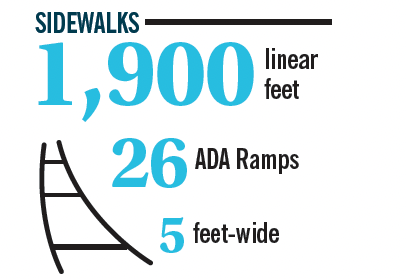
Most recently, the city completed widening a quarter-mile of sidewalks — near Haverty’s furniture store — leaving Haywood Road not only more attractive, but more walkable.
From 2010 to 2016, Duke Energy buried power lines and the city began installing sleek LED street lamps. In all, the three-phase project cost $5.3 million for the utility work and $287,000 for the sidewalks, the city says.
“There was a clutter of signage and utility poles. We addressed those priorities,” says White — priorities the city heard “loud and clear,” according to the 60-page report city planners and community members compiled.
A fresh vibe
These days, Pazdan, along with former steering-committee members Misiaveg and longtime Greenville developer Ward Stone, is seeing what the master plan promised in its subtitle: “Creating the Vision for Uptown Greenville.”
“If you look at your suburban office concentration and you look at apartments, new apartment units are being built like crazy around there,” Misiaveg says.
Take Woods Crossing, for instance. the area’s largest such project, now going up just a third of a mile from one of Stone’s developments, Shops By the Mall.
When it’s completed in late 2022, early 2024, the “walkable community” will comprise 321 residential units; 20 live-work suites; two of its 11 acres dedicated to green space; a dog-wash building; and 35 bicycle spaces, according to a February 2020 Upstate Business Journal report.
“Our hope is that the development will spark some newer and faster development in the immediate area,” says Flournoy Development Group’s application to the city.
Misiaveg also points to Greenville’s $6.4 million plans to install bridges on the Prisma Health Swamp Rabbit Trail, including one over Haywood Road near its termination at Laurens Road.
These combined efforts — buried powerlines, controlled signage, contemporary streetlights, new sidewalks and the like — add a sky’s-the-limit vibe to the corridor. Or, as Shel Silverstein’s classic children’s book, “Where the Sidewalk Ends,” might say as Haywood Road’s sidewalks are beginning, “It’s amazing the difference a bit of sky can make.”
Jamie Bryant is seeing big differences already since moving her 3-year old business from downtown Easley after the mall recruited her a year ago.
“I think it’s beautiful, it’s clean, it’s safe,” she says of Haywood Road. “It has all of these elements that you want to see in a preeminent area.”
The 20-year Greenville resident and owner of Plum at Haywood Mall, upscale home décor and gift boutique says she sees the corridor turning into a destination hotspot like Midtown Atlanta.
“I feel like the Haywood Road area has personality,” she says. “It’s really alive with the pulse of the community.”